
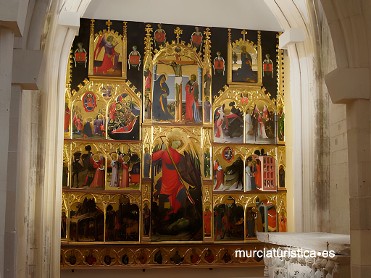
MURCIA


Plaza Cardenal Belluga
30001 - MURCIA
Museum of the Cathedral.
MURCIA
Plaza. San Agustín, 3
30005 - MURCIA
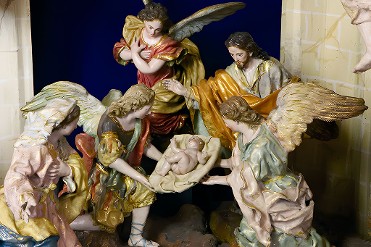
Salzillo Museum. It was opened in 1960 and deeply remodelled in 2002 by the architect Yago Bonet Correa. It is a mixture of typologies: we have the Baroque Art which is still alive under the watchful eye of the Church of Jesus, see of the Brotherhood of the same name and which was declared artistic historical monument from 1935; and also the Contemporary Art, created in 2002 by this architect. A mixture of styles which coexist in perfect harmony. In the outside, in the lateral façade we find a magnificent portal which belongs to the ancient Renaissance Palace of Riquelme (previously located next to the Plaza de San Bartolomé and currently disappeared). It is meaningful that this family also ordered Salzillo the sculpture set of the nativity scene in 1776. This project kept him busy until his death in 1783. In the church of Jesus the Nazarene, famous thrones of Francisco Salzillo are exposed and walk in file on Good Friday morning: "La Caída" (1752), "la Verónica" (1754), "San Juan" and "la Dolorosa", made between 1752 and 1777, "la Santa Cena del Señor" (1763), "la Oración en el Huerto" (1752), "el Prendimiento" (1765) and "Cristo amarrado a la columna" or "Los Azotes", which was made between 1776 and 1777 and the last throne of this maker of religious images. The carving which names the Brotherhood, "Nuestro Padre Jesús" (Our Father Jesus), an anonymous carving of the 16th and 17th centuries and the one which gives its own name to a brotherhood, is the only one that wasn't made by Salzillo. 556 figures, which form the famous "Belén" (Nativity scene) also highlight. These figures were ordered to Salzillo by the marquis of Riquelme, and also an interesting collection of original clay sketches.
MURCIA
Avenida Alfonso X, 1
30001 - MURCIA
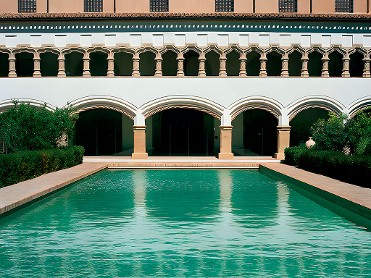
Santa Clara Museum. On the Islamic-Mudejar palace of the Emir of Murcia, Ibn Hud, the monastery of Santa Clara was founded, which since 1365 houses the Clarisas nuns. In this building come several centuries of history and different cultures such as Islamic, Gothic and Baroque. The museum space and the nuns coexist in total harmony. It conserves one of the oldest Arabic pools in Spain. TIME: 13th, 15th and 18th centuries STYLE: Arabic, flamboyant and baroque.
MURCIA
Plaza Santa Catalina, s/n
30004 - MURCIA
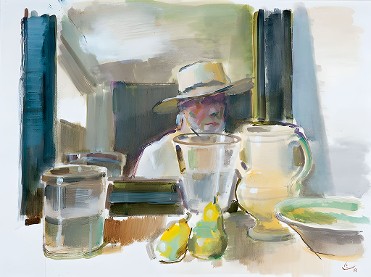
Ramón Gaya Museum. It is located in a beautiful mansion of Murcian style of the 19th century, the "casa Palarea" (Palarea house), and it shows the work of one of the best contemporary Murcian painters. It has sketches, posters, literary pieces and a retrospective collection of his own work and of other painters of his generation (Pedro Flores, Luis Garay, Juan Bonafé y Joaquín), as well as that of English painters who have been in Murcia in the 20s (Cristóbal Hall, Darsie Japp, Windham Tryon).
MURCIA

Av. Alfonso X "el Sabio", 7
30008 - MURCIA
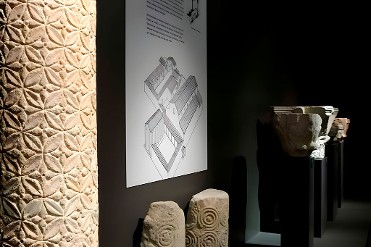
The Archaeological Museum is located in the House of Culture. At the beginning it was built as Provincial Palace of Archives, Libraries and Museums, thanks to the architects Luis Moya and José Luis León. It opened its doors in 1956. It is the best museum to know the most characteristic of regional archeology. TIME: XX Century STYLE: Historicist
MURCIA
C/ Obispo Frutos, 12
30003 - MURCIA
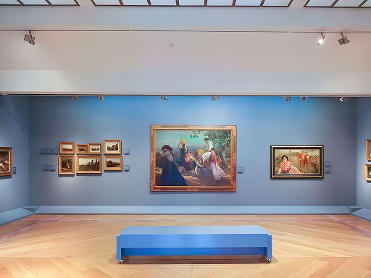
The Museum of Bellas Artes (Fine Arts) of Murcia is one of the most established institutions of our Region. Its origin is linked to the Comisión Provincial de Monumentos de Murcia (Provincial Commission of Monuments of Murcia) of 1844. Its preservation and conservation works of the patrimony of monuments, with the purpose of founding the Museo Provincial (Provincial Museum), will materialise in 1864. This year, the Museo Provincial de Pintura y Escultura (Painting and Sculpture) will be created and later on, the Section of Archaeology will be added. The building, opened in 1910, is a work of the architect Pedro Cerdán, who uses an impeccable language to express the premises of the architectural eclecticism. FIRST FLOOR: Room I.- Painting of the 15th and 16th centuries. Renaissance in Murcia. Room II.- The art in Murcia during the 17th century. SECOND FLOOR: Room III.- The art of the 17th century. The painting of the Golden Age. Room IV .- Cabinet of art. Room V.- The Enlightenment and the 18th century in Murcia. The art during the eighteenth century. THIRD FLOOR: Room VI.- From the Academic art to Eclecticism. The Great Pictorial Genres. Room VII.- Costumbrist painting. Regionalism. Room VIII.- Allegories room. Decorative Painting. The Landscape. Room of temporal expositions. Museo de Bellas Artes de Murcia Brochure(2 Mb)
MURCIA
Plaza de las Agustinas, 7
30005 - MURCIA
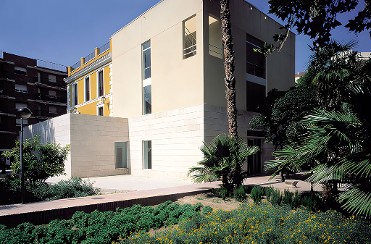
Museum of the City is located in the old house of the nineteenth century of the Lopez-Ferrer family, and on the same site where the Tower of Junterón, residence of Don Gil Rodríguez de Junterón, was built in the 16th century. The building happened to be of municipal ownership in 1994 and shortly after was remodeled and conditioned to lodge a museum on the history of Murcia. It offers a wide cultural offer of temporary exhibitions, activities, book presentations, etc. TIME: XIX - XX STYLE: Neoclassical
MURCIA
Plaza de la Ciencia, 1
30002 - MURCIA
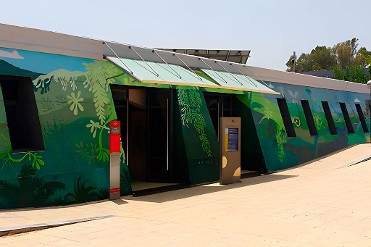
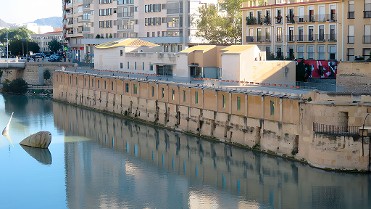
Museum of Science and Water.

MURCIA
Calle Molinos, 1
30002 - MURCIA
Hydraulic Museum "Molinos del Río”.
MURCIA
Calle Sacerdotes Hermanos Cerón, 25,
30002 - MURCIA
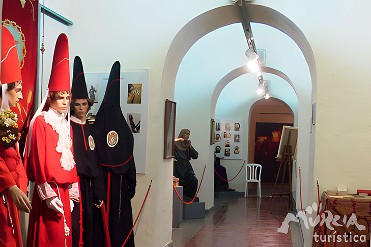
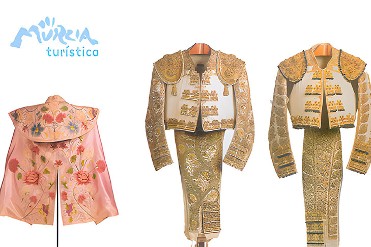
Museum of "La Sangre".
MURCIA
C/ Cartagena s/n (1º planta del Pabellón II, Antiguo Cuartel de Artillería)
30002 - MURCIA
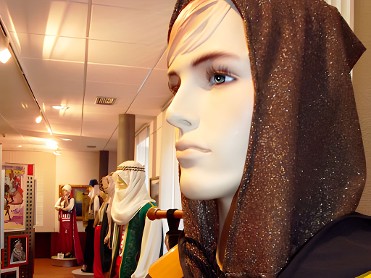
Las fiestas más populares de la ciudad de Murcia son las de Moros y Cristianos, de ahí que la comisión de fiestas se decidiera a crear un museo específico para poder acercar al visitante a la misma, declarada de Interés Turístico Nacional. Allí se exponen trajes de las distintas kábilas y mesnadas que desfilan anualmente en la Fiesta, así como carteles oficiales en sus más de 30 años de existencia. ÉPOCA: Siglo XX ESTILO: Moderno
MURCIA
C/ Cartagena s/n, Pabellón 4, Antiguo Cuartel de Artillería
30002 - MURCIA
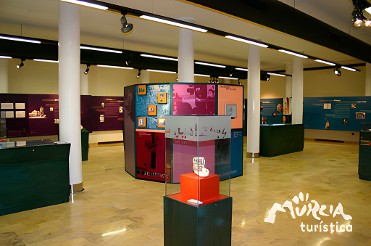
Museum of the University.
PUENTE TOCINOS (MURCIA)
Calle Olivo esquina con Travesía Torre 2, s/n,
30006 - PUENTE TOCINOS (MURCIA)
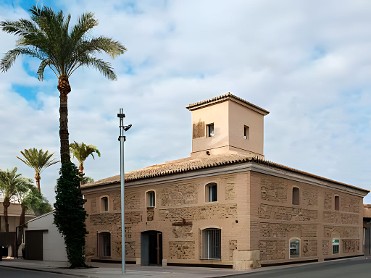
No hay que irse muy lejos para disfrutar del Belén de Puente Tocinos. Su casa-museo se ubica en la Casa Torre del pueblo, más conocida como la del Reloj. A través de este edificio se promociona y difunde la artesanía del Belén con obras y artistas locales pero de gran prestigio nacional. Cabe destacar que Puente Tocinos siempre ha sido conocida por su tradición belenística. ÉPOCA: Casa del siglo XVIII. Museo del siglo XXI. ESTILO: Arquitectura popular. Foto realizada por: José Luis Montero
MURCIA
Calle del Pilar, nº 8
30004 - MURCIA
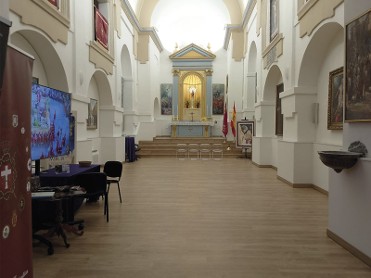
La Ermita del Pilar es un monumento emblemático del siglo XVII, ubicado en la esquina entre las actuales calles del Pilar y Julián Calvo. Fue construida entre las antiguas antemuralla y muralla islámicas, en la zona adyacente a la Puerta de Vidrieros, inexistente en la actualidad. Tiene declarados como Bien de Interés Cultural (BIC) sus paños de muralla y los escudos de su fachada.

MURCIA
Avda. Juan Antonio Perea 6, bajo
30002 - MURCIA
Welcome to our museum! The exhibition showcases the collection of Fran Bermejo and Diego Lizán, two individuals passionate about the creative world, art, illustration, and toys. Years ago, they started a diverse collection featuring a wide variety of action figures, LEGO, Playmobil, toys from different eras, and a unique collection of designer toys (art toys) in the Region of Murcia. These collectible designer toys are created by artists from various fields, mainly illustrators, and are usually made of vinyl. You might be surprised when we say that FYD Museum is not a toy museum. Traditional toy museums generally focus on more historical pieces or a specific theme. FYD Museum follows only one criterion: what we love and what excites us. Scheduled visits If you would like to schedule a visit outside the museum's regular hours, you can do so by contacting us through this form, calling us at +34 644 074 297, or emailing us at hola@fydmuseum.com. Where to find us FYD Museum is located inside Parque Viudes, in the Barrio del Carmen district of Murcia, next to the railway station at Av. Juan Antonio Perea, 6 bajo, 30002 Murcia.


