
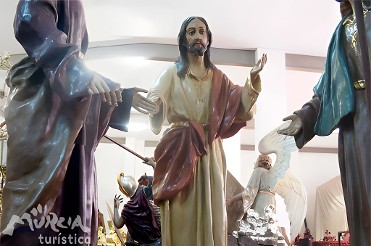
CIEZA
C/ Cánovas del Castillo, 7
30530 - CIEZA
Built in 1970, it houses inside an important part of the heritage of the brotherhoods of the Holy Week of Cieza: images, thrones, banners, lanterns, balles, costumes, etc. The lower floor is devoted entirely to the steps that parade in our processions. On the upper floor, the dependencies of the different brotherhoods and the Board of Brotherhoods itself are distributed, as well as the Board and Exhibitions Room, in which it can be contemplated.
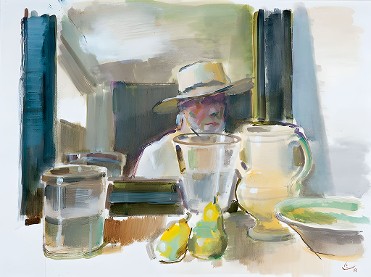
MURCIA
Plaza Santa Catalina, s/n
30004 - MURCIA
Ramón Gaya Museum. It is located in a beautiful mansion of Murcian style of the 19th century, the "casa Palarea" (Palarea house), and it shows the work of one of the best contemporary Murcian painters. It has sketches, posters, literary pieces and a retrospective collection of his own work and of other painters of his generation (Pedro Flores, Luis Garay, Juan Bonafé y Joaquín), as well as that of English painters who have been in Murcia in the 20s (Cristóbal Hall, Darsie Japp, Windham Tryon).
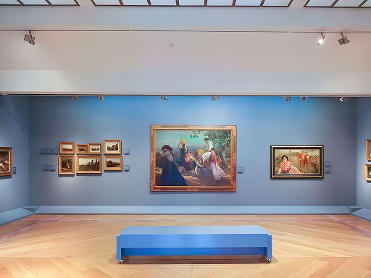
MURCIA
C/ Obispo Frutos, 12
30003 - MURCIA
The Museum of Bellas Artes (Fine Arts) of Murcia is one of the most established institutions of our Region. Its origin is linked to the Comisión Provincial de Monumentos de Murcia (Provincial Commission of Monuments of Murcia) of 1844. Its preservation and conservation works of the patrimony of monuments, with the purpose of founding the Museo Provincial (Provincial Museum), will materialise in 1864. This year, the Museo Provincial de Pintura y Escultura (Painting and Sculpture) will be created and later on, the Section of Archaeology will be added. The building, opened in 1910, is a work of the architect Pedro Cerdán, who uses an impeccable language to express the premises of the architectural eclecticism. FIRST FLOOR: Room I.- Painting of the 15th and 16th centuries. Renaissance in Murcia. Room II.- The art in Murcia during the 17th century. SECOND FLOOR: Room III.- The art of the 17th century. The painting of the Golden Age. Room IV .- Cabinet of art. Room V.- The Enlightenment and the 18th century in Murcia. The art during the eighteenth century. THIRD FLOOR: Room VI.- From the Academic art to Eclecticism. The Great Pictorial Genres. Room VII.- Costumbrist painting. Regionalism. Room VIII.- Allegories room. Decorative Painting. The Landscape. Room of temporal expositions. Museo de Bellas Artes de Murcia Brochure(2 Mb)
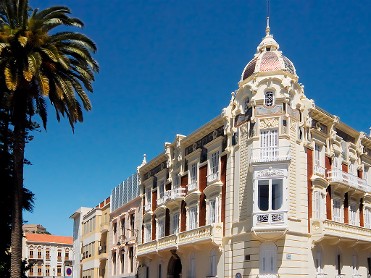
CARTAGENA

Pza. de la Merced, 15-16
30202 - CARTAGENA
THE REGIONAL MUSEUM OF MODERN ART is a place to contemplate and enjoy artistic manifestations from the XIX century till the mid XX century from the Region of Murcia and other areas. Located in the Aguirre Palace and in a modern adjoining building, the museum beholds modernism and traditions. In the exhibition halls of the museum, we can appreciate the artworks by some of the most important artits of th epoch, and allows the visitor to envisage and approach this period so crucial in the History of Art.
YECLA
C/ España, nº 37. Palacio de los Ortega. Casa Municipal de Cultura
30510 - YECLA
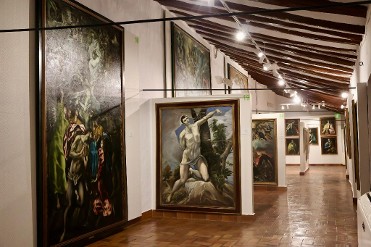
ACTUALMENTE CERRADO POR OBRAS Se encuentra en la actual Casa Municipal de Cultura, ubicada en la Casa Palacio de los Ortega. El edificio es una buena muestra de arquitectura civil del siglo XVIII, conservando buena parte de su estructura original. Situado en su segunda planta, este Museo recoge 73 réplicas de otras tantas obras originales de El Greco, realizadas por el pintor yeclano Juan Albert Roses. Durante 20 años, Albert Roses recorrió el enclave de cada uno de los cuadros originales para reproducirlos con absoluta fidelidad.
CEUTÍ
C/ Clavijo, 1
30562 - CEUTÍ
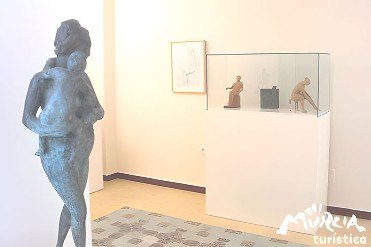
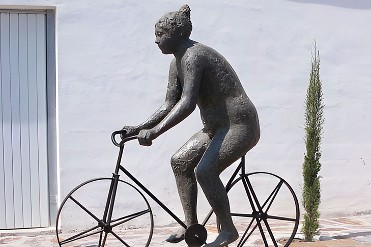
En la peatonalizada zona histórica de Ceutí, dentro de uno de los pocos edificios nobles del siglo XIX que se conservan en el pueblo, se encuentra el museo Antonio Campillo: Una colección única donde el visitante podrá conocer toda la trayectoria profesional del artista, descubrir los motivos que le obsesionaban (los caballos, la mujer, maternidad, las ciclistas), contemplar barros, bronces, escayolas, bustos, miniaturas, dibujos, bocetos... Todo el universo simbólico creado por Campillo, lo más representativo de su amplia obra y sin duda, la obra más completa que existe del mismo. Visitar el museo es adentrarse en el mundo de Antonio Campillo, en sus temas recurrentes, en la insinuación que supone cada una de sus obras. Las salas están cargadas de belleza, de curvas sugerentes que invitan al visitante a perfilar la obra, a darle la expresión que desee, en su acto de complicidad con el artista. Así, cada pieza es permanentemente diferente, porque acaba de fraguarse en los ojos de cada visitante: no es un museo, si no muchos museos... tantos como personas lo visiten.
CEUTÍ
Sin domicilio (recorrido por la localidad)
30562 - CEUTÍ
Obras situadas en edificios públicos: Ayuntamiento de Ceutí: - Desnudos en bronce (José Planes) - El violinista (Paco Barón) Centro Cultural: - Vuelo rasante (Paco Barón) Biblioteca: - El ciprés de Silos (Paco Barón) Obras situadas en espacios abiertos de reciente ubicación: - Torso (Eduardo Lastre) - Michelina (Fernando Bellver) - El Caballo de Troya (Pepe Yagües) Obras situadas en la zona de Los Torraos: - Murales costumbristas (Marisa Peagudo) - Monolito de entrada a Los Torraos (Diego Mirete) Otros autores con obra en el Polígono Industrial de Los Torraos: - José Noja y José Luis Sánchez Obra situada en la salida a la autovía de Murcia-Madrid: - Zepti, espacio de luna (Antonio Martínez Torres)


