
ALHAMA DE MURCIA
Cerrado temporalmente

C/ Sánchez Vidal, 5
30840 - ALHAMA DE MURCIA
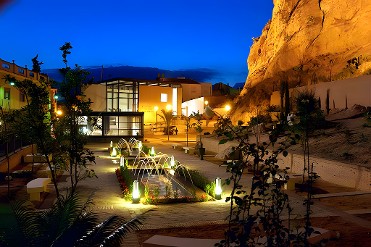
Temporarily closed for renovation work, efficiency improvements and museum digitisation, The Museo Arqueológico de Los Baños is an on-site museum, created to preserve and protect the archaeological remains of the Baths of Alhama de Murcia. Its restoration and development has meant an important contribution to the study of hydrotherapy and its architecture throughout different periods of its history. The thermal complex has restored its original areas through a series of renovation projects and adaptations, creating a modern building, a garden area with water at the forefront and the inside museological preservation of the remains, showing thematic sections about different cultures. Its architecture is an example of conservation of heritage, in the same complex, from Roman rooms, to their reuse in the Islamic and Christian periods, until the construction of the new Hotel Spa in the 19th century. In 1983 its archaeological remains were declared a Historical Artistic Monument of National Character and in May 2008 it was included in the Region of Murcia’s Museum Network. The Museum hosts the Archaeological Collection and Municipal Ethnographic of Alhama.
SAN PEDRO DEL PINATAR

Avda. de Orihuela, s/n
30740 - SAN PEDRO DEL PINATAR
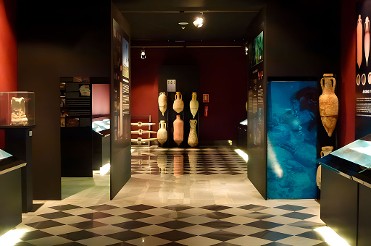
This municipal museum is situated in the historic building known as the Palace of the Baron of Benifayó or Casa de la Rusa. Inside, there are various rooms dedicated to different themes: Archaeology: This section features a display of the municipality’s main archaeological finds, both on land (La Raya) and underwater (Punta de Algas, San Ferreol, La Barra and El Mojón), as well as a selection of fossils and artefacts from prehistoric cultures in the south-east. Alongside these artefacts, there are a series of informative and engaging explanatory panels and models, which provide visitors with key details about the exhibits. Ethnography: This section is dedicated, on the one hand, to the bourgeoisie who settled in San Pedro del Pinatar in the late 19th century, building their summer residences and participating in the social life of the time, and, on the other hand, to the ordinary people who, through their work and effort, managed to build up the municipality and bring it to its current level. Some of the main trades that drove the economy at the time are represented: fishing, agriculture, salt curing and the saltworks. Collection of antique toys: Visitors can view over 300 antique toys, loaned or donated by contributors. The exhibition takes visitors on a journey through the history of toys, from the earliest slingshots, marbles and spinning tops to the first computer video games. Collection of vintage film equipment: Vintage projectors, cameras and equipment typically found in projection rooms. Temporary exhibition gallery: A variety of exhibitions on different themes are held throughout the year (see Facebook).
CIEZA
Paraje del Estrecho. A 1 km de Cieza
30530 - CIEZA
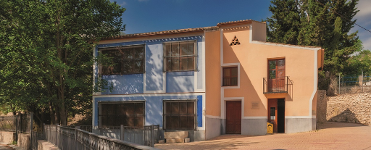
This hydraulics museum is localize in the peripheries of Cieza, in the right side of the Segura river from where it took the water to moved its machines. The first document about it is from the date of 16th November of 1507 and was used in the elaboration of fluor since that time until first years of the second half of the XX Century. This mill is know by different names through the time such as: Regidores Perpetuos at the beginning of the XVI century and at the end of this century also by the name of The Mill of the St. and later by Marín (1559), Andelma (1609) and Cebollar (1830). Since the beginningof the XX century the mill belong to the García family and is known by the name of its owner Theodoro, until nowadays. In the ground floor is localize the machines used in the milling and there happen the following steps: Cleaning: The wheat comes into bag to the ground floor and pass through the washing machine, the beating and the drying when lost most of its dirt like stones, straws etc, later its goes to a pit and when using an elevator goes to other machine when lost its husk and is ready to be milled. Milling. The bag with the wheat clean are drain in the mill which is milled by big stones, the end of this process is the obtaining of semolina which through an elevator goes to the first floor to be sift. In the first floor is localize the machines used to sift the semolina and end of this process is the obtaining of two products: The flour which is packet in bags and the rest of the semolina is divided by size using an air current and packet in bags too. In the basement is localize the aqueduct divide into the pars by a wall and two wood water wheels in a horizontal position, which have the function to transmit the power to the machines, and in the back side of the museum is the canal where the water pass with the function to move the water wheels.
EL LLANO (MOLINA DE SEGURA)
Pza. de la Ermita, s/n
30509 - EL LLANO (MOLINA DE SEGURA)
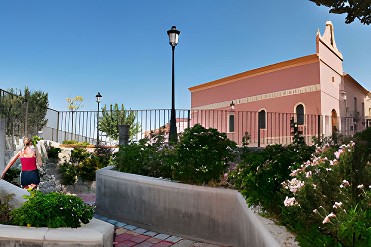
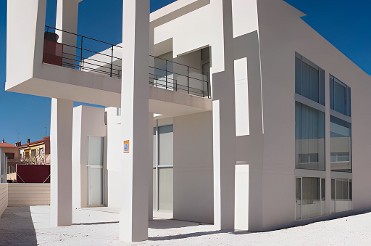
Descripción El conjunto museístico incluye una casa, una ermita, una noria y un huerto. La casa principal consta de dos plantas: en la planta baja se ubica la cocina, un amplio vestíbulo, con el tinajero y los chineros, la escalera y el antiguo patio, transformado en sala de usos múltiples. Se ha ambientado el mobiliario y el menaje típico de la época. En la planta primera está el dormitorio principal, ambientado como uno típico burgués del siglo XIX. Esta planta también acoge una muestra de indumentaria tradicional de los siglos XVIII y XIX. Asímismo, esta planta alberga un conjunto de miniaturas de útiles de la huerta e hidráulica tradicional, realizado por Juan de Dios Arnaldos, dedicadas a las tradiciones de la huerta y que contiene aperos de labranza, una recreación de la vida en una barraca huertana, la noria y una reproducción de las distintas formas de aprovechamiento de la fuerza hidráulica, como una fragua, un batán y un molino harinero. Sólo accesible para discapacitados la planta baja del museo.
BARRANDA (CARAVACA DE LA CRUZ)
C/ Pedrera, s/n
30412 - BARRANDA (CARAVACA DE LA CRUZ)
The museum is famous for its exoticism, variety and for the authenticity of its works. A great variety of cultures represented are spread out in 145 countries from all continents. The collection covers 4 categories of well-known musical instruments: chordophones, membranophones, idiophones and aerophones, depending on how the sound is produced and the materials of each instrument. Within these classifications, the museum offers to its visitors a thematic exhibition about religions in the world as well as music instruments from slavery, magic and witchcraft. It also exhibits other themes which relate different fields of the human being to music. The museum ethnical music also offers to its visitors a special section which pays tribute to Barranda and its Festivity of Cuadrillas. The collection has been gathered by the ethno-musicologist Carlos Blanco Fadol, who has dedicated his life to the investigation and the gathering of the increasingly limited instruments from all corners of the world that are progressively disappearing because of the advent of new musical technologies.
CIEZA
C/ de Pablo Iglesias, 53
30530 - CIEZA
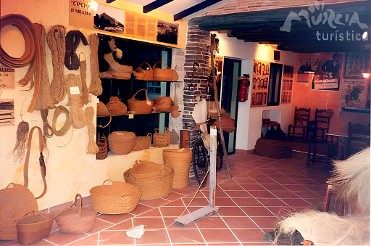
El esparto es una de las señas de identidad de Cieza mas distintivas y perennes, presente en crónicas desde tiempos prehistóricos por sus múltiples usos agrícolas y hogareños. El museo es el resultado de la iniciativa popular, coordinada por el Club Atalaya-Ateneo de la Villa de Cieza, con la contribución de vecinos que han cedido desinteresadamente enseres e instrumentos, y la colaboración del Ayuntamiento de la ciudad. Guía básica del museo Este pequeño museo nos ofrece un recorrido elemental por los principales procesos de la primitiva artesanía de industria manual del esparto en Cieza (arranque en el monte, secado de las tendidas, cocido de las balsas, picado en los mazos, rastrillado, hilado en las ruedas, elaboración de los cordeles, trenzados y estropajos), con una muestra de los diferentes utensilios y herramientas utilizadas en los diversos trabajos, así como de los diversos productos manufacturados de esparto y su correspondiente documentación impresa y fotográfica Cuenta con una pequeña biblioteca y tienda. Visitas concertadas con demostraciones de artesanía y de confección de hilados y de estropajos.
JUMILLA
Pza. de la Constitución, 3
30520 - JUMILLA
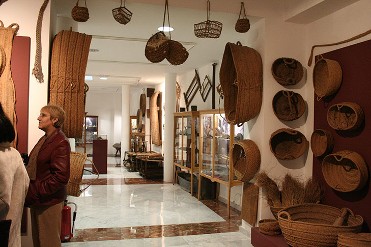
El museo situado en la plaza de la Constitución, se divide en tres plantas. La primera planta está dedicada a la Geología y Paleontología, dónde se puede contemplar una extraordinaria colección de fósiles del término municipal y más de quinientos minerales, de distintos puntos de la geografía española. La estrella de la sala, el mejor registro fósil de icnitas-huellas fósiles- del Terciario de todo el mundo procedentes del yacimiento de la Hoya de la Sima o la Sierra de las Cabras: rinocerontes, mastodontes, cabras, grullas y hasta camellos (huella más antigua de Europa), dejaron su pisada impresa hace 6 millones de años. La planta se completa con una amplia colección de minerales y fósiles. En la segunda planta, se exhiben una gran cantidad de materiales y herramientas relacionadas con oficios desaparecidos. Incluida la mejor colección de esparto de la Región. Destaca una excelente botica, con tarros y botamen de los siglos XVI al XX, y mobiliario de cajonería del XVIII al XIX. La última planta alberga una colección de entomología, formada por 7.000 ejemplares, de los que se exhiben 1.500 lepidopteros y coleopteros de todo el mundo.
SAN JAVIER
Ctra. a Cartagena, s/n
30730 - SAN JAVIER
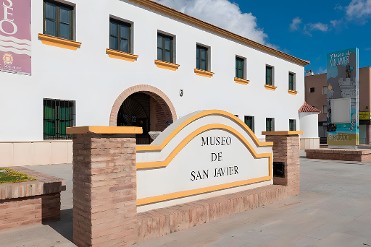
VER VIDEO (Realidad Virtual) Antigua Casa Cuartel de la Guardia Civil. Edificio aislado de mediados del siglo XX que, respondiendo a un antiguo modelo arquitectónico nacional, ha conservado su edificación principal en forma de L, las garitas y el patio central que se erige como uno de los elementos más atractivos del edificio. Sus orígenes como museo se remontan al año 1996. Cuenta con una importante sala etnológica que, a través de sus secciones dedicadas a la tierra (agricultura), el mar (pesca) y el aire (Academia General del Aire), ilustra la historia del municipio entre mediados del siglo XIX y mediados del siglo XX; la sala del Belén de España, homenaje al belén más grande de Europa al aire libre que desde el año 1969 se instala cada Navidad en la Plaza de España de Javier; y una importante sala de exposiciones temporales.
ALCANTARILLA
Avda. Príncipe, s/n
30820 - ALCANTARILLA
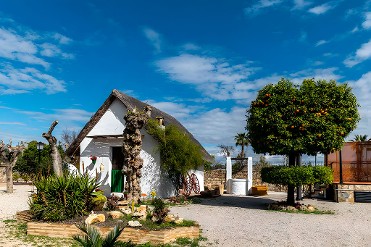
It has a thematic repertoire that shows several ethnographic aspects of the region, those most highlighted are the “barraca”, the wheel, and the monument to the inhabitant of the “huerta” and the hydrology.
BULLAS
C/ Rosario, 1
30180 - BULLAS
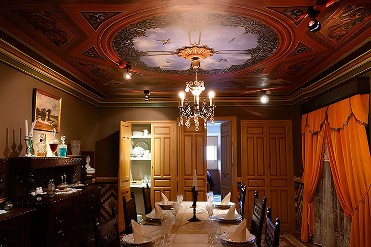
The "Don Pepe Marsilla House Museum. Bullas 1900" seeks to rescue an important part of the local culture of Bullas, recreating the living ways at the beginning of the 20th century. It also wants to preserve the town's historical heritage represented in this building. The visit to this House Museum is placed within the Bullas Wine Route, the set of resources which organizes the tourist offer in the municipality around its identity sign, the wine, but also covering other monumental, historical, cultural and natural attractions. The visit to this House Museum is placed within the Bullas Wine Route, the set of resources which organizes the tourist offer in the municipality around its identity sign, the wine, but also covering other monumental, historical, cultural and natural attractions. Bullas 1900 Time has stopped in 1900 in this old noble house located in Bullas - Rosario street, just behind the parish church. It belonged to Don José Marsilla Melgares de Aguilar (1854 - 1930), commonly known as Don Pepe, who was a rich and powerful landowner but also mayor of Bullas twice. The living area Don Pepe's House shows the ostentatious way of life of the local landowners at the beginning of the 20th century. This fact can be noticed in the library, the living room, the dining room and the bedrooms. The decoration of this noble part of the building is marked by the Modern Style, the main one in Spain and Europe in those years which is characterized by an inspiration in nature, the use of curved lines and the figures stylization. The working area This wide part of the building is a faithful image of the economic activity developed in those years in Bullas as it is the place where the different works and tasks to process the huge productions of Don Pepe's properties took place.
BULLAS
Avda. de Murcia, 75
30180 - BULLAS
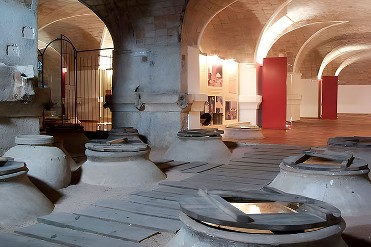
An exciting walk along the history of the wine to know in a didactic and pleasant way, from the craft elaboration in days gone by to the most modern methods, which allow us to obtain the most appreciated wines of today. Tariff: Individual ticket: 3'5 euros Groups (Minimum 12 people): 2 euros Pensioners / young and student Card: 2 euros Schoolchildren: 1 euro
CEUTÍ
C/ D. Eloy, s/ n
30562 - CEUTÍ
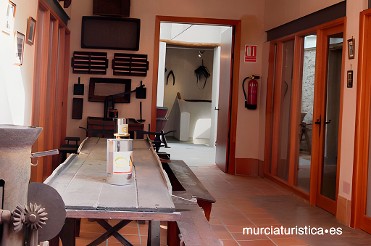
Ubicado en una vivienda de finales del siglo XIX, cuyo propietario la había destinado a Fábrica de Conservas y domicilio particular, el museo muestra la historia del municipio a través de una de sus industrias, las fábricas de conservas vegetales, que tan importantes fueron para la economía del pueblo; y de sus objetos cotidianos, aquellos que acompañaron a los vecinos en sus casas, con los que trabajaron, jugaron y aprendieron. Un retazo de vida que tiene su lugar para que perdure en el tiempo. Aloja una colección de diversos objetos de principios del siglo XX que representan la historia del pueblo: aperos de labranza, útiles de diversos comercios o empresas pequeñas como carnicerías, carpinterías, aceiteras, mobiliario de principio de siglo y maquinaria de la industria conservera.
ROCHE (LA UNIÓN)
Avda. M. Cano Vicedo, s/n
30369 - ROCHE (LA UNIÓN)
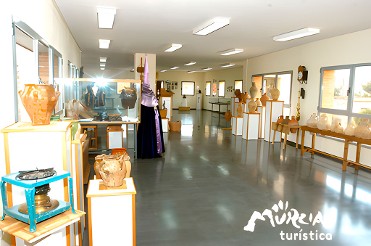
The museum hosts a large collection of daily utensils used by the inhabitants. This permanent ethnological exhibition is made up of a series of implements including domestic elements for lighting, weights and measures, pottery and glass items, clothes, farming implements and containers made of esparto.
MULA
C/ Doña Elvira, 4
30170 - MULA
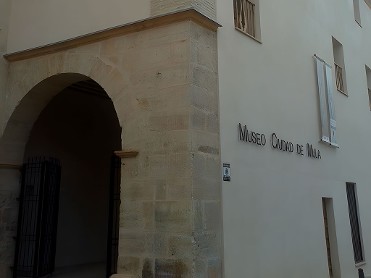
How much do you know about Mula? If it is not enough, the City of Mula Museum will teach you all you need to know about Mula culture, art and customs. One of its permanet exhibitions is " El Legado de Mula en la Historia". In it , the visitor takes a tour around from prehistory to the recent history of the city. The pieces that can be seen just come from archaeological sites in Mula, whose collections were in The Archaeological Museum of Murcia .
LOS PUERTOS DE SANTA BARBARA (CARTAGENA)
C/ LOS MARINES s/n
30396 - LOS PUERTOS DE SANTA BARBARA (CARTAGENA)


