


Rural houses
Aledo
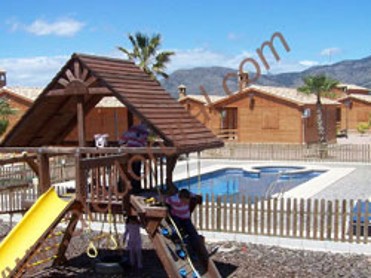
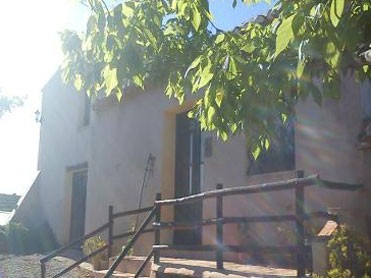
Casa antigua rehabilitada con decoración rústica. Se encuentra en el campo de Aledo, rodeada de almendros.
Rural houses
Aledo
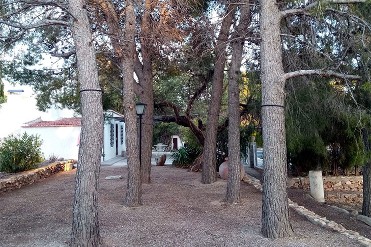
La Cañaica es una vivienda rural de principios del siglo XX con colañas de madera y teja árabe que dispone de una capacidad para 8 personas, distribuidas en 3 camas de matrimonio y 2 camas individuales (3 habitaciones). En su exterior cuenta con barbacoa, horno moruno, jardín amueblado, piscina de 11 x 6 para mayores y para niños de 2 x 3, terraza y zona de aparcamiento. En su interior cuenta con baño compartido, calefacción, comedor, lavadora, microondas, sala de estar, televisión y Wifi. Cerca de La Cañaica, podrás conocer lugares como: Villa medieval de Aledo. Sierra Espuña (Morrón altitud 1.500 m.). Cueva de la Mauta. Estrecho de la Arboleja. Totana (Iglesia Santiago el Mayo, Yacimiento de la Bastida, etc.) Puerto de Mazarrón (playas)
Visitor centers
Aledo
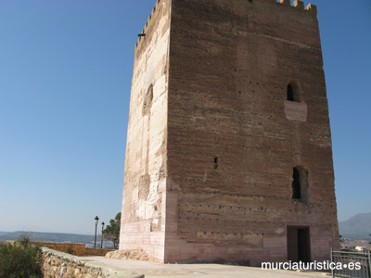
The main tower opened its doors to the public in 2008 after being restored and it was built in a way as to serve for the purpose of an interpretation center. The cistern on the lower floor has been put to use as a reception and screening room. The first floor contains various explanation points whose content focuses on the historical medieval context of Aledo, most notably the understanding and recreation of its defensive system and the influence of the Santiago Order around the village. On the upper floor you will find installations of modules with explanations attached. The modules pan around the urban layout of the village and display the Sanguista’s defensive strength during the 15th and 16th centuries; it also displays the main tower and accompanying it a description of the building, its constructive techniques and its armaments. In this spot you will be able to contemplate a series of graffiti throughout the ages that depict jockey riders, boats and beads, etc. These sets of representations are until now the most documented of its kind in military history surrounding the region.


Lugares de interés
Patalache (Aledo)
El entorno natural que se descubre ante el visitante al recorrer el inicio de la Rambla de los Molinos, le permite contemplar la forma en la que los diferentes procesos geológicos, remotos y actuales, se desarrollan, logrando espacios de un valor cultural y paisajístico incalculable dentro de un entorno natural semiárido. Procesos geológicos remotos, acaecidos millones de años atrás, mares de gran profundidad, playas tropicales, deltas y arrecifes de coral conformaron sus rocas, y otros procesos más recientes, protagonizados por el agua, continúan modelando y esculpiendo las mismas rocas. Fruto de esto se ha desarrollado una diversidad geológica muy importante, con manantiales, terrazas y desprendimientos. El mayor exponente lo encontramos con la cueva de la Mauta, perfecta unión entre agua, gea y flora hoy fosilizada en travertinos El entorno, aunque resulta accesible y no requiere el acceso un gran esfuerzo físico, es apto únicamente para grupos reducidos y personas hábiles, pues la mayoría de los accesos y caminos discurren por antiguas acequias y estrechas sendas que la vegetación comienza a borrar, dificultando el paso y aumentando el riesgo de caídas y arañazos. Los procesos continúan hoy activos, con lo que la posibilidad de desprendimientos, aunque remota, existe y conlleva un peligro cierto. Del mismo modo, los desplazamientos de tierra en el Cabezo del Molino, han provocado inestabilidad en su ladera este, con lo que el paso por estas zonas no resulta recomendable al tratarse en muchos casos de materiales sueltos. Del mismo modo, contribuyendo en la preservación de este entorno natural, debemos tener cuidado de no arrojar restos de basura y cuidar de la gea, flora y fauna. Los fósiles, comunes en este paisaje, están protegidos la Ley de Patrimonio Histórico Español de 1985 y por la recientemente aprobada ley 4/2007, de 16 de marzo, de Patrimonio Cultural de la Comunidad Autónoma de la Región de Murcia, prohibiéndose así el cogerlos.
Lugares de interés
Aledo
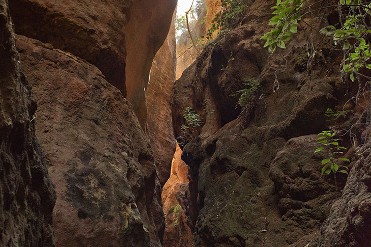
Este emblemático espacio natural está formado por un pequeño "cañón" que durante miles de años el agua ha ido esculpiendo sobre la roca caliza. Centenares de metros de longitud y entre diez y quince metros de altura, albergan en su interior pequeños nacimientos de agua, formas calizas en sus paredes y pequeñas lagunas, convirtiendo este paraje en un paraíso natural de belleza inigualable. Para llegar hasta el Estrecho hay que tomar la carretera C-21 dirección Lorca, apreciándose a dos kilómetros del casco urbano una señal de color crema y naranja, que indica el desvío para llegar a este entorno. Una vez tomado dicho desvío, trescientos metros más adelante, se encuentra un puente de madera que da indicios de la existencia de este cañón. Una vez hemos llegado a un área de recreo que existe, con paneles, barbacoas y sombraje, donde podemos aparcar los vehículos, descendemos una escalinata que se encuentra dirección Suroeste del área de recreo, llegando hasta un enorme algarrobo que se encuentra frente a la escalinata, justo a la derecha del cual encontramos la entrada la propia rambla y a este entorno maravilloso.
Hotels
Aledo
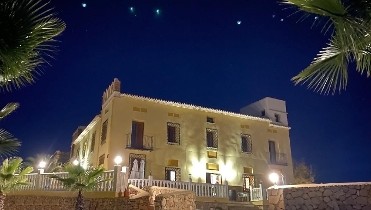
Se trata de un hotel con mucho encanto y con espectaculares vistas a Sierra Espuña, la Villa de Aledo y la Sierra de la Tercia. Dispone de 8 habitaciones y una suite con hidromasaje. Todas las habitaciones disponen de todos los servicios propios de un hotel de lujo (caja fuerte, espejo de aumento en el baño, secador de pelo, albornoces y un completo set de amenites. El hotel cuenta con un restaurante gastronómico (abierto al público en general), donde disfrutar de especialidades murcianas, nacionales e internaciones, con un toque de autor, además de un espectacular menú de alta cocina de degustación que hacemos una vez al mes. También cuenta con una gran piscina circular con un jacuzzi central y que por la noche se convierte en un elegante espacio de copas y música
Monuments
Aledo
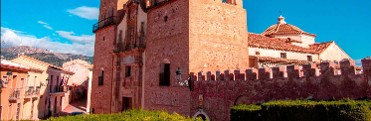
In the brief Muslim period which Aledo was besieged, the current Santa Maria la Real church was initially a mosque with only one nave and a bell tower. It was converted to a Christian church after the cession of Aledo to the Santiago Order (1257). The construction of the second catholic temple and current church was initiated in 1761, the scarcity of resources meant that the work would not be finished until 1803. The completion of the church was made possible by the contributions of the king of Etruria Infante Carlos, Count of Montemolin. The church itself has a Baroque style and its finishes are reminiscent of Neoclassicism. The neo-classical influence can be appreciated when one gazes at its facade, its smooth pilasters and the towers made by interlocked bricks, it is also apparent in the masonry cases. It has a Latin cross floor plan with three naves separated by pilasters which hold up pointed arches. Inside there are Baroque elements such as the cornices mixed with other neoclassic elements. The image of the star in the church possesses a name, Santa Maria La Real. This virgin’s sculpture is one of the oldest in the region and dates back to the 16th century. The piece of art itself is influenced majorly by the Gothic style. The images of the Dolorosa virgin and the Aurora virgin (1775) are works of art attributed to the Murcian sculptor Francisco Salzillo.
Monuments
Aledo
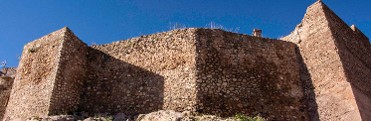
The remains of the Aledo wall date from the 11th century. The founders of this urban monument were its Muslim ancestors. In its beginnings the town of Aledo was protected from wars and raids and fights by an imposing stone wall that surrounded all of the small town. Currently one is able to view the remains of the Aledana wall in a good condition because in 1999 it was restored. The construction of the Aledo wall was made by utilizing the technique of “ramming the earth” which consisted of placing a mould of wood into the earth and throwing compacted earth over the top of it, then hammering the earth until it was dry; afterwards the wooden mould is removed and what remains it its place is a sturdy wall.
Monuments
Aledo
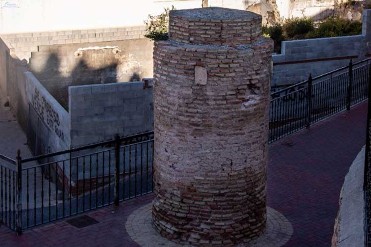
It is named after pico (pillory) because the heads and body parts of those who were executed were stuck on these pillories. This construction is a sign of feudal oppression. During the Middle Ages prisoners were tortured till confession and then exposed to the public, tied up to the pillories so that people would throw stones and insults at them. On 26th May 1813 the Cortes of Cádiz ordered to destroy all the pillories to ensure the freedom of the inhabitants. Aledo's pillory was built in the 16th century, after 25th July 1592, when the village was granted independence from the Order of Santiago and got the right to have its own prison and pillory. Originally, Aledo's pillory was just a log firmly fixed to the ground. To provide it with greater stability, it was later covered with bricks, remaining unchanged until our days. Shackles are still kept and spikes where prisoners were tied up or had their members stuck on are still visible. Structure: it has a cylindrical structure covered by a layer of bricks which prevents it from wearing away.