
Festivities
Abarán
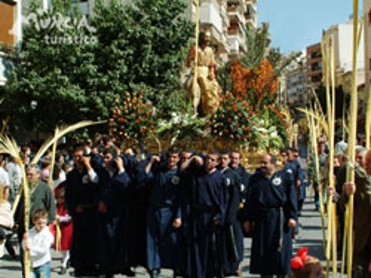
The Holy Week processions in Abarán are some of the most colourful and beautiful ones in the Region of Murcia. Not surprisingly, it is declared as event of Regional Tourist Interest since 1985. The religious and the civil shake hands, being precisely the Plaza del Ayuntamiento the place where one of the most popular moments of the Holy Week of Abarán takes place: the procession of the Encuentro or de las Reverencias (Encounter of Bows), on Easter Sunday. Bands of cornets and drums, and different thrones meet until they welcome the throne of the Virgin with two inclinations, which wait with excitement for the throne of the Resucitado (Resurrected). In that moment, music starts sounding and doves are released.
Festivities
Murcia
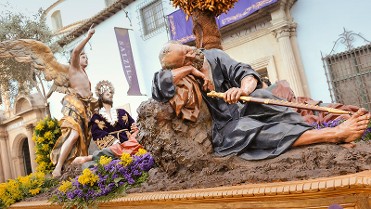
Anyone attending a procession in Murcia for the first time, specially one of the most popular processions, will witness a series of astounding images that have no equal in Spain. A celebration such as the Holy Week only gains personality and difference through the years, and Murcia counts on some Brotherhoods from the Middle Ages: the beginning of the 15th Century, when the plague and famine devastated a population left at random, that turned to faith in order to look for a remedy. In the year 1400, a river of blood started up. That blood dyed the dresses the same red that fiercely covered the body of Christ with pain. Time after that -centuries after that-, with the ups and downs of history, the Brotherhoods multiplied until they reached the splendour and vitality they are so proud of today. We are talking about 15 Brotherhoods: fifteen associations, each one with thousands of moved processionists that turn into estantes, penitents or musicians responsible for the sound that accompanies and characterises certain parts of the processions -the long sound of the tubas, instruments that are as huge as the groans they produce. Let's talk about some more figures. During the days of the processions, starting with the Viernes de Dolores -Dolores Friday-, more than 80 groups go through Murcian streets. It is a true open-air religious art exhibition that summarizes almost five centuries of the Murcian imagery's development. Important artist names are Francisco Salzillo, whose mention brings to mind the Baroque, skill, tact, depth and moving beauty, and also Roque López, Domingo Beltrán and Nicolás de Bussy, all of them great sculptors, honourably followed on the essentials by the artists of the present century. People coming to this city for the first time will be able to verify that Murcian generosity is not just literature but also a real thing, and that it is even present at its processions. The processions have turned something that used to be a necessity into a very peculiar characteristic: people brought some food from the huerta -irrigated areas used for cultivation-, where they lived, to the city, to be prepared for the procession's long route. That is why today, from the swollen bellies of the Nazarenos, all kinds of presents come out. These presents can be fresh broad beans or sweets, pastries or hard-boiled eggs; it is a celebration full of generosity, maybe difficult to understand at first. Despite this, that generosity has much to do with the spirit of these days, when the greatest generosity ever is commemorated: the generosity of offering the own life to the others.
Festivities
Lorca
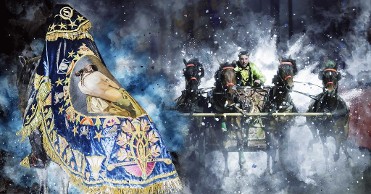
Up to this moment, for one reason or another, the peculiar way of celebrating the Holy Week in different towns of Región de Murcia has been pointed out. But when it comes to Lorca, we need to speak of uniqueness: something you never saw before. It is a world divided into two parts. Blancos -the "White" ones- or Azules -the "Blue" ones-. Zeal and passion which are sung, shouted, shown as distinctive features are usually shown; circles of people outside the Churches where the Azules' Dolorosa Virgin and the Blancos' Amargura Virgin are: circles of people where throats cheer each other, warming up by trying to pronounce the longest and strongest "¡viva!". There is no average term in Lorca. Furthermore, the entrenchment of Blancos and Azules goes beyond the belief at this time of the year. It has more to do with roots and custom, with things you have lived through. It is a town vibrating in two halves but in unison. Serenades, "salves" and marches in order to collect both groups' flags are reasons enough for the visitor to feel every second that he is part of a collective enthusiasm where nobody is a foreigner. Lorca's Holy Week is as intense as an energy pill. It has not just religious intention, but also secular expression, wisdom and the experience of having represented episodes from the Bible and the Passion for more than a century, by uniting different historical civilisations with recent and present ones. That is why Lorca's Viernes Santo -Holy Friday-, the greatest and most overwhelming one among those celebrated these days, leaves nobody indifferent. In Lorca's main road, by means of amazing parades, you will experience many episodes recalling Asiria, Babylon, Greece, Egypt and Israel, as well as prophets, emperors or kings, all of that in a baroque sense of aesthetics and with a great display of imagination that will fascinate you and will end up seducing you. It is important to attract the visitor's attention towards the magnificent embroideries which are shown during the parade: authentic popular jewels that have been woven with care, in silence, secretly, in the way big companies hush up their scientific progress. The hands of Lorca's embroiderers, together with their gold, silk and fine fabric work are sought-after goods, the results of which -shown on banners, capes and different ornaments- make the public spontaneously applaud from their stands, appreciating throughout the route their effort and beauty. And that's not all. After seeing the cavalry, the groups marching, the carriages and chariots, the pirouettes and pesades performed before thousands of spectators, the real collective ecstasy arrives: it is the moment of the stroll of Virgen de los Dolores and Virgen de la Amargura's thrones before Lorca's people. The excitement arises unexpectedly. Lorca is a clamour, Lorca glows. Everyone applauding his or her own venerated image, but showing a wonderful respect for the opposing side's image that demonstrates that here, every year and for a long time, one of the most sublime moments for everybody's senses takes place.
Monuments
Molina de Segura
La Chimenea de Hernández Gil perteneció a la antigua fábrica de conserva de El Pelícano. Al derribar la instalación en su solar se hizo un jardín, el Huerto Fayrén, donde permanece la chimenea. A su lado podemos admirar la escultura del artista Manuel Mateo Cuenca: El Consejo “Homenaje a la Mujer”. Está representada por dos figuras sentadas representando en actitud dialogante los consejos que una persona adulta le da a otra más joven. Está realizada en acero corten de 3 mm. de grosor. Esta técnica escultórica permite trabajar con grandes superficies planas cosidas con soldadura. La pretensión, al elegir ésta técnica, es conseguir que tanto las aristas como las líneas sean lo más puras posibles para que luz y sombra queden perfectamente definidas. Está montada sobre una peana, también de acero cortén, que descansa sobre un plinto de obra.


Holiday accommodation
Águilas
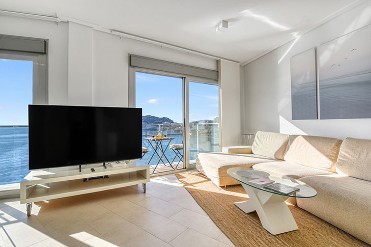
Este apartamento con aire acondicionado tiene acceso directo a un balcón con vistas al mar y cuenta con 2 dormitorios y cocina totalmente equipada. Se ofrece TV de pantalla plana. Características del apartamento: Dormitorio 1: Cama doble con vistas panorámicas al mar. Dormitorio 2: Litera (3 plazas). Cocina totalmente equipada (lavadora, lavavajillas, tostadora, cafetera). Armarios empotrados. Aire acondicionado. Garaje.
Museums
Águilas
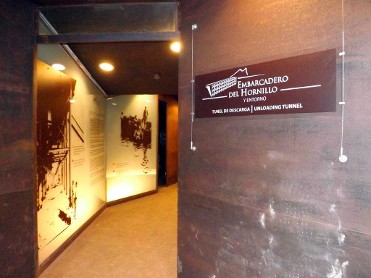
Hornillo Pier and musealised tunnel. Open-air Museum, following the old railway tracks, up to one of the old unloading tunnels and viewpoints.


Hotels
Gebas (Alhama de Murcia)
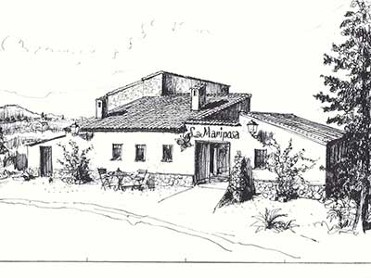
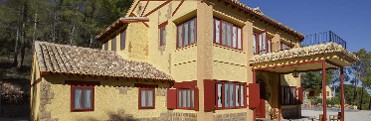
Posada rehabilitada situada en el pueblecito Gebas, cerca de Alhama de Murcia y al pie del Parque Regional de Sierra Espuña. La Mariposa le ofrece, en un ambiente acogedor, la tranquilidad de gozar desde sus terrazas de la vista espléndida del valle y de los famosos Barrancos de Gebas. En su jardín bajo de los pinos puede relajarse y refrescarse en su piscina. El comedor le acoge en tiempos más fríos con el calor de la chimenea y la sincera hospitalidad de sus dueños. Idiomas: español / nederlands / deutsch / français / english. CERRADO TEMPORALMENTE
Hotels
Casas Nuevas (Mula)
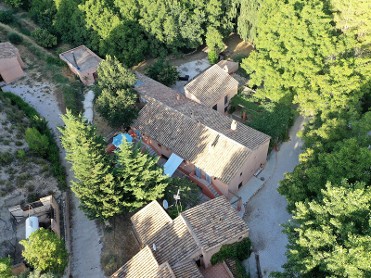
El edificio, que se remonta a 1932, servía a los ingenieros del trasvase del taibilla. Situada en el corazón de la Región de Murcia, en el Parque Natural de Sierra Espuña, en una de las zonas más bonitas de todo el parque : la cara norte, entre la Umbría de Espuña y la Sierra del Cambrón y Pedro Ponce. Todas sus habitaciones son exteriores, disponen de cuarto de baño individual, calefacción y agua caliente. Zonas comunes con todo lo necesario para satisfacer su necesidad de descanso y entretenimiento. Además, paseos en bicicleta de montaña, deportes de aventura, senderismo y sobre todo naturaleza y paz. Teléfonos: 968 431 820 610 031 082 654 834 363
Hotels
Benablon (Caravaca de La Cruz)
El Molino del Rio es un Hotel Rural con encanto situado en el pintoresco paraje del Cañón del Río Argos , al pie de las montañas de la Sierra del Gavilán, en un espacio natural protegido del Noroeste de Murcia, y cercano al Parque Natural de Sierra Espuña. La mayoría de las casas rurales que conforman este molino harinero fueron edificadas a principios de 1500. Se ha cuidado tanto en la estructura como en la decoración el sabor del s.XVI y el confort actual, para ofrecer el ambiente de un hotel con encanto. La Hospedería está rodeada por una finca ecológica de nogales y frutales. Cuenta con huerto ecológico de temporada para la cocina de El Molino. Al encontrarse junto al antiguo camino de Granada este hotel se convierte en parada obligada de esta ruta, y su cercanía a Murcia, Archena y Caravaca de la Cruz hacen posible que también se puedan disfrutar desde aquí las ofertas de turismo cultural, turismo termal y turismo religioso y monumental de estas ciudades. A tan sólo 10 Km. de Caravaca de la Cruz, 5ª ciudad santa del mundo, los apartamentos rurales de El Molino del Río son un lugar perfecto desde el que realizar senderismo y peregrinación a la Basílica de la Vera Cruz. Desde El Hotel Rural El Molino proponemos: Catas de Cerveza Artesana. Más información: www.cervezaelmolino.com Gastronomía El Molino del Río. Nuestra chef Encarna López te descubrirá sabores mediterráneos, con guiños escandinavos, gaditanos, malagueños y de raíces del Noroeste. Actividades para la salud y el bienestar psicofísico. Las actividades previstas para los próximos meses se actualizan en la web: www.saludociocultura.com Senderismo: 3 senderos de pequeño recorrido y subidas a 1500-2000 mtr. Visita a la Divisoria del asteroide K3 (Cretácico-Terciario). Uno de los 3 lugares del mundo en que puede observarse con sobrecogedora claridad la capa de cenizas que produjo el choque del asteroide contra la Tierra hace 65 millones de años y que provocó la gran extinción de los dinosaurios. Museo de Música Étnica de Barranda (Colección Carlos Blanco Fadol). A 4 Km. del hotel rural El Molino del Rio, merece la pena realizar una visita a este museo con actualmente la colección más importante del mundo, y dónde organizan además conciertos de música gratuitos. TELEPHONE: 968 433 381 / 692 65 48 04

Monuments
Mula
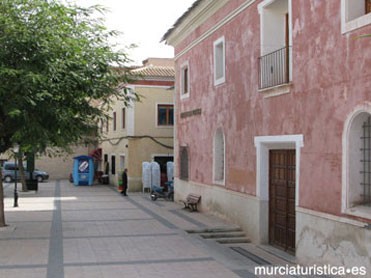
It is located south of Avenue Juan Antonio Perea. The only remain of this hospital is the front cover from the XVIII century, where there is a decorative relief with the Virgin and some verses having to do with the help provided to patients in this building.
Monuments
Cehegín
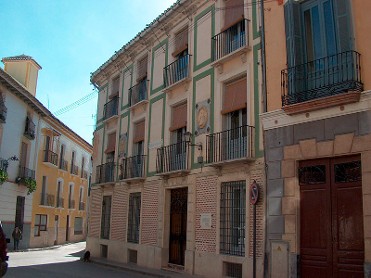
The founders of the Hospital de la Real Piedad are very present in the building. If you look closely, you will see sculptures of the Counts of the Real Piedad, as well as a coat of arms of the Chico de Guzmán family in one of its corners. The centre has been successively remodelled in the 19th and 20th centuries. It is a two-storey building. The façade, on the ground floor, has courses of exposed brick and stuccoed masonry panels, while the two upper floors have smooth walls.


