Salas de exposiciones
Yecla
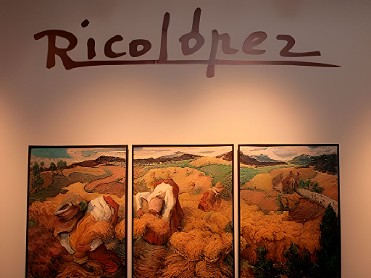
Permanent exhibition of the Yeclano artist Rico López. Inaugurated on 17 May 2014, the Museum is born from the artist's desire to donate part of his artistic legacy to his city. The collection is made up of fifty oil paintings with mowing and fishing scenes in which its strong chromaticism stands out. Simple and everyday scenes such as a watering hole with thistles, a basket of garlic, the whitewashed walls of the houses or a mother rocking her child. He also offers works from his last stage, which he defines as "conceptual surrealism". The Museum also has ten albums with information on the numerous exhibitions that the artist has made throughout his career.
Natural areas
Alhama de Murcia
Totana
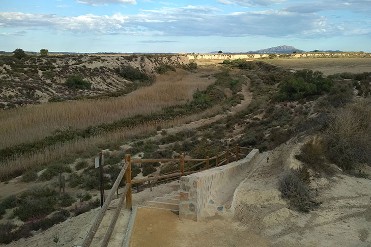
En el fondo del Valle del Guadalentín, entre Sierra Espuña y la Sierra de Carrascoy, se encuentra este Paisaje Protegido, camuflado entre un amplio mosaico agrario de cultivos extensivos de regadío, cultivos de arbolado y construcciones humanas, donde aparece en su mayor expresión la vegetación natural de la zona: el saladar. Es una llanura salina en torno a diferentes cursos fluviales, destacando las ramblas de Las Salinas y La Quebrada de Beatriz, o el conocido cauce del río Guadalentín, que es el más importante y que le da nombre. La superficie protegida se corresponde con cuatro áreas de saladar aisladas entre sí, consideradas relictos de un área de saladar mucho mayor en décadas pasadas. Es Lugar de Importancia Comunitaria (LIC) por estar aquí representados siete hábitats de interés comunitario, siendo el de las estepas salinas de interés prioritario. Además, está designado como Zona de Especial Protección para las Aves (ZEPA) por la presencia de la cigüeñuela (Himantopus himantopus) y ortega (Pterocles orientalis). Más información: www.murcianatural.carm.es/web/guest/saladares-del-guadalentin
Monuments
Lorca
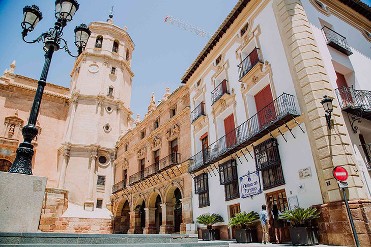
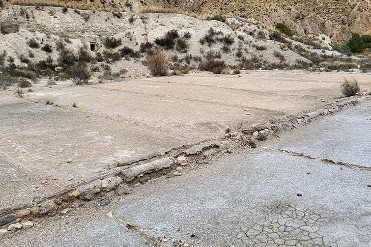
En el S. XVIII se comienzan a levantar las Salas destinadas al Cabildo de la Insigne Colegial lorquina. La fachada se remató con la imagen de San Patricio.
Lugares de interés
Ojós
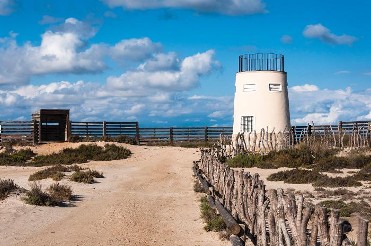
Donde se cristaliza la sal procedente de un yacimiento de agua salada, explotada desde la época romana.
Routes and visits
San Pedro del Pinatar
Diseñada para niños y familias, esta actividad ofrece una forma divertida y educativa de descubrir el Parque Regional. A través de la mirada infantil, los más pequeños aprenderán a identificar aves por su nombre y sus sorprendentes costumbres. Además, explorarán la flora típica de este entorno natural y descubrirán algunos de los animales más diminutos, tan pequeños que necesitarán una lupa para observarlos. Salida a las 11:00 h desde rotonda de los Flamencos (Avda. del Puerto) https://goo.gl/maps/SfJ1CuWUC7G5mWNW6 Duración: 2 horas Distancia: 2 km Necesaria inscripción previa en: https://www.turismoregiondemurcia.es/es/visitas_guiadas/

Auditorios y teatros
Molina de Segura

Fairs and conferences
Torre Pacheco
Del 27 al 29 de noviembre, el Palacio de Ferias y Exposiciones IFEPA será el epicentro del mundo del motor en la Región de Murcia. Llega la nueva edición del Salón del Automóvil, el mayor escaparate de coches nuevos y de ocasión, donde encontrarás ofertas exclusivas y una gran variedad de modelos en un solo lugar. Si buscas tu próximo coche o quieres estar al día en la industria automotriz, este es el evento ideal. Miles de visitantes lo esperan cada año para aprovechar precios irresistibles y conocer las últimas novedades del sector. ¡Ven y descubre el coche de tus sueños! No importa si eres un comprador particular o un profesional, aquí encontrarás la mejor oferta automovilística del momento. ¡Te esperamos en IFEPA para vivir una experiencia única! VIERNES Y SÁBADO – 10:00 A 20:30 HORAS DOMINGO – 10:00 A 19:30 HORAS


Monuments
Ulea
El Yacimiento del Salto de la Novia de Ulea es uno de los enclaves arqueológicos e históricos más importantes del Valle de Ricote y de la Región de Murcia. Situado junto al río Segura, entre Ulea y Ojós, este asentamiento ocupa una ladera elevada desde la que se domina visualmente el valle, un emplazamiento estratégico que permitió controlar el paso natural y las comunicaciones de la zona durante siglos. El yacimiento conserva restos de estructuras defensivas, murallas y antiguas estancias pertenecientes a un asentamiento fortificado de época tardorromana, habitado principalmente entre los siglos IV y VII. Las construcciones se adaptan a la pendiente del terreno mediante terrazas artificiales y espacios escalonados, reflejando la importancia militar, agrícola y territorial que tuve este enclave histórico. Además, las excavaciones arqueológicas realizadas durante del siglo XX permitieron documentar parte del poblado y descubrir evidencias de ocupación desde época ibérica hasta la llegada musulmana. Rodeado de un entorno natual de gran belleza paisajística, el Salto de la Novia ofrece impresionantes vistas panorámicas del Valle de Ricote, la huerta tradicional y las montañas que rodean Ulea y Ojós. Su combinación de arqueología, historia, naturaleza y leyendas populares convierte este espacio en una visita imprescindible para quienes desean descubrir el patrimonio cultural y paisaístico de la Región de Murcia.

TaXIs
Alhama de Murcia
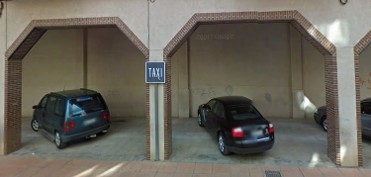
Parada de taxi en C/ Tomás Moro. Licencia de taxi nº 6.

Museums
Murcia
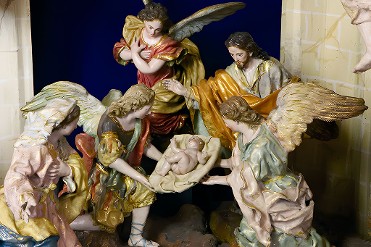
Salzillo Museum. It was opened in 1960 and deeply remodelled in 2002 by the architect Yago Bonet Correa. It is a mixture of typologies: we have the Baroque Art which is still alive under the watchful eye of the Church of Jesus, see of the Brotherhood of the same name and which was declared artistic historical monument from 1935; and also the Contemporary Art, created in 2002 by this architect. A mixture of styles which coexist in perfect harmony. In the outside, in the lateral façade we find a magnificent portal which belongs to the ancient Renaissance Palace of Riquelme (previously located next to the Plaza de San Bartolomé and currently disappeared). It is meaningful that this family also ordered Salzillo the sculpture set of the nativity scene in 1776. This project kept him busy until his death in 1783. In the church of Jesus the Nazarene, famous thrones of Francisco Salzillo are exposed and walk in file on Good Friday morning: "La Caída" (1752), "la Verónica" (1754), "San Juan" and "la Dolorosa", made between 1752 and 1777, "la Santa Cena del Señor" (1763), "la Oración en el Huerto" (1752), "el Prendimiento" (1765) and "Cristo amarrado a la columna" or "Los Azotes", which was made between 1776 and 1777 and the last throne of this maker of religious images. The carving which names the Brotherhood, "Nuestro Padre Jesús" (Our Father Jesus), an anonymous carving of the 16th and 17th centuries and the one which gives its own name to a brotherhood, is the only one that wasn't made by Salzillo. 556 figures, which form the famous "Belén" (Nativity scene) also highlight. These figures were ordered to Salzillo by the marquis of Riquelme, and also an interesting collection of original clay sketches.
Monuments
Mazarrón
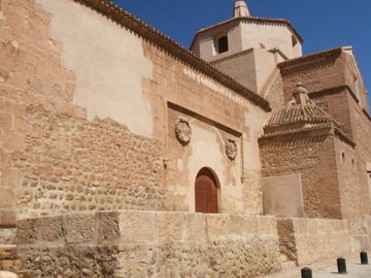
The San Andrés Church was built by the Marquis of Villena. From the original structure the main room has been conserved, distinguished for its handcrafted beauty, in the Mudéjar style. The rest of the building has been subjected to different restorations, giving it the architectural style that the church shows today. The interior still has some remains of parietal pictures and decorations. One of its two doors, the lateral one, corresponds to where the temple’s original entrance was, and as described by González Simancas during his early 20th century visit, it held the coat of arms of Guzmán, Cisneros, Enríquez and others, inscribed in circular flowers and fruits crowns and fruit in relief, in a style similar to the Junterón chapel within the Cathedral of Murcia. The San Andrés Church has been declared a Site of Cultural Interest.
Monuments
Mazarrón
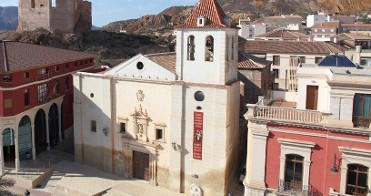
At the feet of Los Vélez Castle hill, and within the population nucleus that would extend around it, the San Antonio de Padua church is located very near the San Andrés Church (16th century). The Church of San Antonio, completed in the second half of the 16th century, was ordered to be built by the Marquis of Los Vélez to provide space for the religious rites of the workers who lived in the villa and depended on him. The temple is a very simple construction, subjected to different reforms and changes in time, especially during the 19th and 20th centuries, when the cupola of the transept was repaired and a new bell tower and vestry were built. During the Civil War (1936-1939) the Baroque altarpiece and some smaller altars were destroyed, later to be substituted by pieces created to reproduce the original ones. Inside, the cupola of the transept is distinguished for its pendentives with paintings of saints. On the main facade, a niche of San Antonio de Padua is distinguished in addition to Los Vélez coat of arms.