
LORCA


Castillo
30800 - LORCA
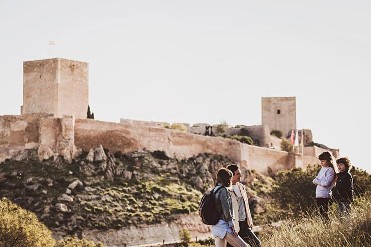
The Castle of Lorca is an ancient medieval fortress from the 11th to the 13th centuries. It was used over time to defend the border between the kingdoms of Murcia and Granada. It was in use until well into the 16th century. During the War of Independence (1808-1814) it was again used as a place of refuge and defence. Today it hosts a recreation and exhibition of the Middle Ages. Here you can visit the towers, cisterns and the archaeological remains of the Synagogue from the 15th century. Translated with www.DeepL.com/Translator
LORCA
Castillo de Lorca
30800 - LORCA
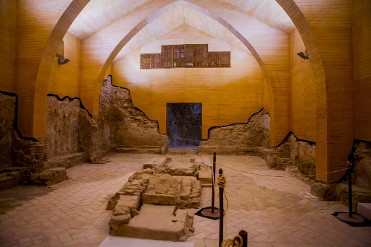
Archaeological Park of the Castle and Synagogue In medieval Lorca the castle, and under the protection of the Alfonsina Tower, housed the city's Jewish quarter. Excavations in this quarter have revealed what the Jewish houses of the time were like, with a rectangular floor plan, compartmentalised into rooms, and in which spaces can be identified for living rooms, kitchens, storerooms and other rooms that house different uses, as well as benches attached to the wall, jars, cupboards, raised bedrooms, etc. In the Jewish quarter of Lorca, the Hebrews established their synagogue, an exceptional example of Jewish religious art in Spain. The temple was built underground because according to the laws of the time it could not exceed the height of the churches and this, together with the fact that it was never converted into a Christian temple, has allowed the synagogue to be preserved in an exceptional state. The Archaeological Park of the Castle of Lorca has been conceived as a space to enjoy the finds excavated in the Jewish quarter through a walk through the streets of the archaeological remains of the Jewish quarter, discovering what their houses, their offices and traditions were like, and the feeling of Jewish spirituality with a visit to their exceptional synagogue.
LORCA
Castillo de Lorca
30800 - LORCA
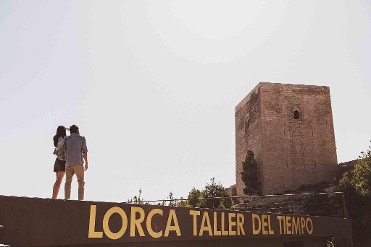
The Torre Alfonsina is located inside the Castle - Fortaleza de Lorca. It was built in the 13th century under the mandate of the Castilian King Alfonso X el Sabio, to whom it owes its name.
LORCA
Pza. de España
30800 - LORCA
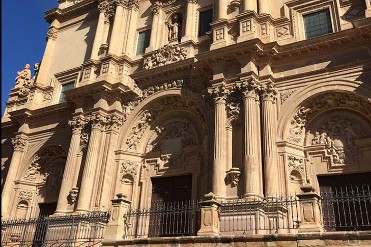
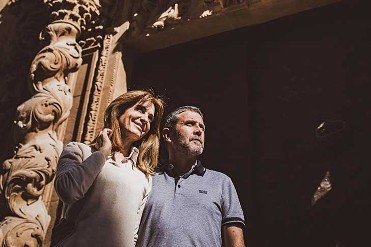
Among all the buildings of ecclesiastical character is without doubt the church of St. Patrick the most important. This temple is placed under the patronage of Saint Patrick (patron saint of Ireland) in remembrance and commemoration of the victory achieved in the Battle of the Alporchones, fought by the people of Lorca against the Muslims on March 17, 1452. Its construction was carried out between 1536 and 1780 on the design of Jerónimo Quijano, master of the works of the Bishopric of Cartagena, so the entire interior, despite the long construction period, has a marked Renaissance air, logically more pronounced in the first spaces raised. Conceived with cathedral airs, its interior is articulated in three naves, lateral chapels between the buttresses, choir and trascoro, elevated transept, ambulatory with radial chapels and tower in the head that houses the sacristy inside. The facade and its union with the rest of the temple took place between 1694 and 1710 under the direction of José Vallés. With him a good number of the stonemasons present at Lorca participated: Ortiz de la Jara, Salvador and Diego de Mora, Sanchez Fortun, etc., who will appear in the following decades directing important works in the city. It is the headquarters of the Brotherhoods of the Curia, and of the Risen One, so that during Holy Week the patrimony exhibitions of these brotherhoods can be contemplated.
LORCA
C/ Lope Gisbert, 12
30800 - LORCA
The Palace of Guevara or the Columns, as it is also known, is the most significant building in the entire civil baroque of the city. Construction ordered by Don Juan de Guevara was completed in 1705. The facade is of two bodies, the lower part has Solomonic columns, abundant decoration with vegetal motifs, fruits and satyrs. The second body shows the representation of the heraldry of the family and, at the top, the shield of the Order of Santiago. The patio is formed by arches on marble columns decorated with plant motifs, children's heads and shields. The building is publicly owned and is still in the process of being restored after the 2011 earthquakes.
LORCA
Avda. Juan Carlos I
30800 - LORCA
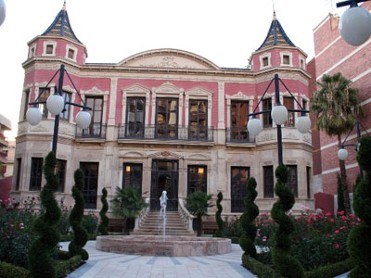
The Palacete Huerto Ruano is located on the main street of Lorca, Juan Carlos I Avenue. It was the home of Raimundo Ruano, but he soon abandoned it and it was used for different uses. Currently it is municipal property and is used as multipurpose, to host exhibitions, presentations or any other event that takes place in the city. Raimundo Ruano, its owner, was one of the most active industrialists of that time and the fact of spending part of his life in Edinburgh caused the new artistic trends in Europe to be reflected in his home. The main facade, flanked by two towers, its decoration, as well as the existence of a garden with a fountain, were a novelty and an example to follow within the local eclectic architecture. Currently this building is used for art and painting exhibitions and other cultural activities. The interior of the building is spectacular and the exterior is decorated with beautiful gardens, water fountains and sculptures.
LORCA
Pza. de España
30800 - LORCA
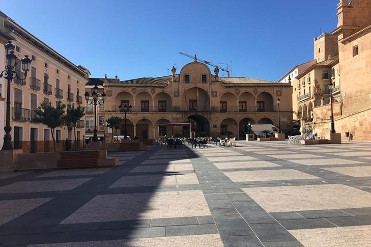
The south wing of the current building, which used to be a city prison, was turned into the new rooms of the council when the building size was doubled. Consequently it gained an overall aesthetic appearance more appropriate to the social sector that had became the most noble and illustrious sector in the city. The extension of the building was based on the plans of Alfonso Ortiz de la Jara (a master mason from Caravaca), who respected the former order and style and combined both sides so harmoniously that it seems to be built in one go. The building consists of a double and open loggia standing on smart Macael (a municipality of Almería) marble columns. Its style is Renaissance, which contrasts with the rich and ornate Baroque of that time. Next to the pediment which crowns the central arch with an iron and projecting balcony there are two sculptures from Juan de Uzeta symbolizing Justice (Justicia) and Charity (Caridad). The Sala de Cabildos, the former plenary hall has been opened to visits. The secret chapel, which was added to this former hall in 1768, is still preserved. The most remarkable element can be worshipped, which is is the image of the Purísima (one of the numerous Spanish names for the Virgin). Its acquisition and authorship are not precisely known. In this regard, there is a unique fieldwork by Professor Mrs García Gainza, who points out the influence of that sculpted by Alonso Cano in 1655 for the Cathedral of Granada. According to her, it is related to Pedro de Mena's workshop around 1670. As far as the paintings in the hall are concerned, a small collection of iconography relating to the military history of the city is exhibited. If booked, Sala de Cabildos can be visited, which nowadays is used for different activities such as weddings receptions, talks, lectures, courses, press conferences, but especially for entertaining and visits.
LORCA
Pza. de España
30800 - LORCA
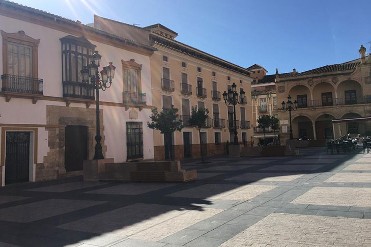
Constituye el enclave monumental por excelencia. Adquirió su forma definitiva en el siglo XVIII, conceptuada como centro de poder, ya que en ella se ubicaron los edificios del Concejo, del Cabildo, Colegial, otros destinados a servicios y viviendas del siglo XVIII y XIX de familias destacadas. Se utilizaba para acontecimientos sociales y culturales. En la actualidad, la plaza posee un encanto particular para todo el que la visite.
LORCA
C/ Corregidor, 1
30800 - LORCA
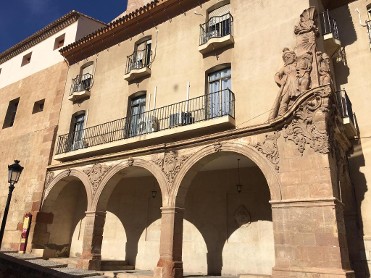
From the old house of the Corregidor, which was concluded in 1750, only a small lodge remains, supported by three pillars on whose spandrels appear in bas-relief masks and symbols of the city (sword and key). Of much greater interest is the sculptural group formed by two cyclopedal figures supported by maces and which hold the figure of a sun, together with the royal and city coats of arms; the superb corner, seen in profile, reminds us of the prow of a ship with a mask. Amongst the well carved rocks there are several inscriptions alluding to the characters already mentioned, Elio and Crota. The whole sculptural group has been attributed to the lorquian carver Juan de Uzeta who would finish it in 1750.
LORCA
C/ Corredera, 22
30800 - LORCA
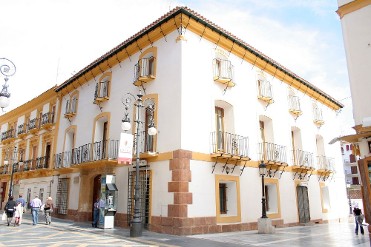
From the old house of the Corregidor, which was concluded in 1750, only a small lodge remains, supported by three pillars on whose spandrels appear in bas-relief masks and symbols of the city (sword and key). Of much greater interest is the sculptural group formed by two cyclopedal figures supported by maces and which hold the figure of a sun, together with the royal and city coats of arms; the superb corner, seen in profile, reminds us of the prow of a ship with a mask. Amongst the well carved rocks there are several inscriptions alluding to the characters already mentioned, Elio and Crota. The whole sculptural group has been attributed to the lorquian carver Juan de Uzeta who would finish it in 1750.
LORCA
Plaza de España
30800 - LORCA
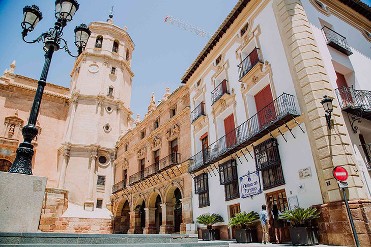
En el S. XVIII se comienzan a levantar las Salas destinadas al Cabildo de la Insigne Colegial lorquina. La fachada se remató con la imagen de San Patricio.
LORCA
C/ Nogalte
30800 - LORCA
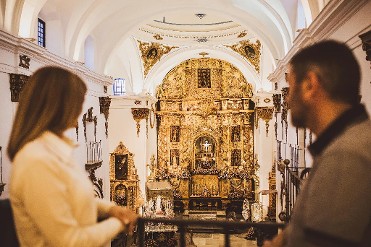
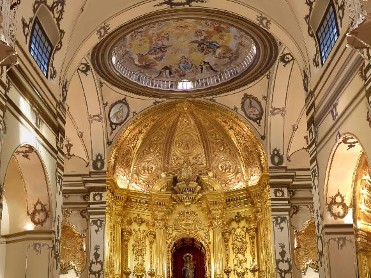
Almost nothing has been preserved of the architecture inaugurated in 1565, as the temple underwent a total reform at the end of the 17th century, to which a later decoration based on rock gardens and symbols of the order on the hanging pendentives was added. The façade, with strictly classicist lines, was completed in 1638 by the stonemason Juan Garzón. Some paintings by the Loquine painter Camacho Felices are interesting, as well as the set of Baroque altarpieces housed in the head of the building. The high altarpiece is worthy of special mention. It was commissioned by Ginés López in 1694. The two main altarpieces in the transept, both attributed to Jerónimo Caballero, are dedicated to San Antonio and to Vera Cruz y Sangre de Cristo. They were dated around the fourth decade of the 18th century. The small altarpiece on the Gospel side contains the image of the Virgen de los Dolores, head of the Hermandad de Labradores (Paso Azul), a work by the Valencian José Capuz from 1941.
LORCA
C/ Sto. Domingo
30800 - LORCA
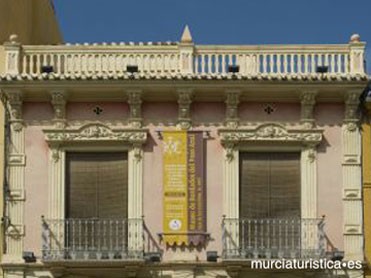
The Chapel of the Rosary, attached to the Church of Sto. Domingo, is the religious headquarters of Paso Blanco. In 1707 the stone was suppressed and its construction was attributed to Toribio Martinez de la Vega. In 1740 the stonemason Pedro Bravo Morata worked the cover. Inside you can see the remains that were left of the old altarpiece, made by the carver Ganga Ripoll in 1747, having reintegrated its architecture and accurately carved by the Lorca Antonio Morales. In the dome and pendentives there are some good tempera paintings, with motifs and characters of the Dominican Order, made by Baltasar Martínez. In this chapel the works of the Embroidery Museum of Paso Blanco are exhibited, which are processioned during Holy Week.
LORCA
C/ Nogalte
30800 - LORCA
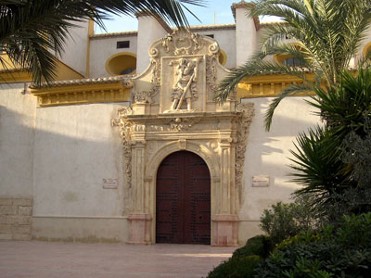
Formerly the Carmelite convent of San Indalecio, its construction began in 1741 when the Carmelite establishment was definitively formalised under the patronage of the king and the Council. Fernández Alfaro and García Campoy were involved in its construction. Of its grandiose baroque interior, the stucco altarpiece stands out, with representations of saints from the Carmelite period, and the decorative solutions of the dome with its elegant wavy cornice attributable to the Grau family. The façade, the second most important of those built in Lorca, was conceived as a large ashlar screen with three bodies in height and three streets that reflect the compartmentalisation of the temple's space to the outside. The convent cloister attached to the church was built late and slowly, but was left incomplete when the confiscation took place. This parish is the religious headquarters of the Cristo del Perdón Brotherhood (Paso Morado) and during Holy Week the exhibition of embroidery and images of the brotherhood takes place here.
LORCA
C/ Portijico
30800 - LORCA
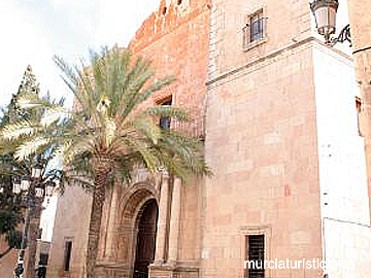
Está situada en el barrio de San Cristóbal. En 1627 se documenta la construcción de alguna capilla y será en 1651 cuando se contrate la primera fachada, hoy desaparecida, con el cantero Alonso Pérez Crespo. Se trata de una obra de líneas sencillas e influencia herreriana patente en el frontón recto partido y las pirámides con bolas. Este modelo de puerta va a ser común en Lorca, perdurando desde comienzos hasta finales del siglo XVII. Durante toda la segunda mitad del siglo XVII se construyen las capillas laterales y en 1714 se contrata el retablo mayor con Manuel Caro. Entre 1742 y 1744 debieron de ser rehechas la torre, capillas anejas, crucero y bóveda de la capilla mayor. Antes de que finalizara el XVIII se levantan también la sacristía (de curiosa planta ochavada) y la nueva portada, a modo de retablo y dentro de los gustos del rococó, cuya labra es atribuible a los Uzeta. La iglesia sufrió grandes daños con la riada de 1802 y su torre actual data de la tercera década del XIX. Todo el interior también hubo de ser redecorado tras la guerra civil.
LORCA
C/ Lope Gisbert
30800 - LORCA
The Church of San Mateo, which was more in the centre of the city, was moved to its current location in 1800, taking advantage of the old Jesuit building, which was unfinished when the Order was expelled from Spain in 1773. Insufficient income prolonged the work throughout the nineteenth century, intervening in the construction of its dome the architect Justo Millan. Inside, the main altarpiece by Jerónimo Caballero, from the disentailed convent of La Merced, the carvings of the four evangelists on the pendentives by the local artist Juan Dimas, and some canvases by 17th century Lorca painters - Miguel de Toledo, Camacho, etc. - are distributed in the church and sacristy.
LORCA
El Calvario
30800 - LORCA
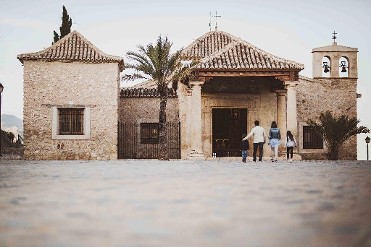
El conjunto de ermitas del Calvario de Lorca es de los más singulares de nuestra Región tanto por su antiguedad como por su configuración. Planteado por los franciscanos a comienzos del siglo XVII, iba desde la puerta de San Francisco hasta un cerro cercano componiendo un remede de la Via Dolorosa de Jerusalén que propiciaba un peregrinaje de sustitución para aquellos cristianos que no se pudieron desplazar a Tierra Santa. Las sencillas cruces de hierro que señalaban las estaciones fueron sustituidas a finales del siglo XVII y comienzos del XVIII por pequeñas capillas con altares decorados con escenas del momento de la Pasión a que correspondían. La ermita mayor es la que concitó mayor interés en cuanto a su decoración. Allí se encontraba el Cristo de la Misericordia, obra de Bussy destruida en la guerra civil, y todavía persiste el retablo labrado por Agustín López en 1714 y la decoración del camaraín realizada por Jerónimo Martínez entre 1769 y 1772. En Semana Santa tienen lugar los Viacrucis organizados por el Paso Morado.
LORCA
C/ Zapatería y C/ Cava
30800 - LORCA
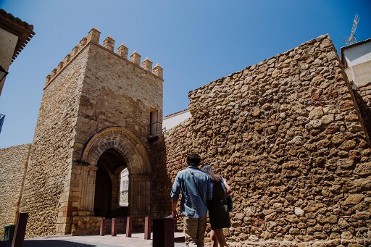
La calle Zapatería va a desembocar en el Porche de San Antonio, también conocido como de San Ginés. Este complejo amurallado ofrece aún hoy día una visión exacta de las dimensiones y conformación de la muralla en el siglo XII. Cercado por dos sólidos cubos dispuestos para su defensa, presenta una puerta de codo, de tradición musulmana, con arco apuntado de sillería que enmarca el acceso. Los importantes restos conservados demuestran que toda la muralla se reedificó a partir del siglo XIII siendo visibles sus cubos y lienzos desde la calle Rambla, paralela al río, hasta el porche de San Antonio, embutiéndose a continuación en las construcciones de la calle Cava, lo que ha permitido un excelente estado de conservación. Bajando por la calle de San Ginés llegamos al antiguo convento de la Merced. Por la escalera lateral del Porche se puede acceder al mirador y contemplar el resto de la muralla medieval y el casco antiguo. Muy interesante para el turista.
LORCA
Calle Selgas
30800 - LORCA
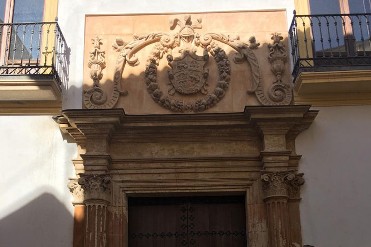
Esta casa se edificó en el S. XVI en la parte trasera del Concejo. En su fachada destacan los escudos familiares y una imagen de la Virgen de Monserrat. Es un edificio municipal que alberga el Archivo Histórico de la ciudad, que contiene documentos de época alfonsina S. XIII.
LORCA
Plaza de Santiago
30800 - LORCA
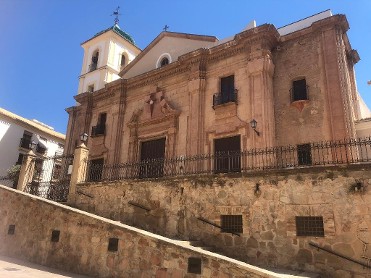
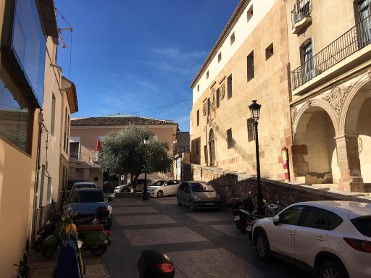
Cuenta la leyenda que el Apóstol Santigo predicó en el mismo lugar donde se levanta la Iglesia. Por esa misma razón en época medieval se levantó una Ermita al Santo Patrón de España, pero en el S.XVI se quiso mejorar la obra realizando una Iglesia de gran embergadura. La obra sufrió varios incendios y terremotos y nunca se llegó a concluir. En los terremotos de 2011 fue uno de los templos que más sufrió pues perdió su techumbre desde el coro hasta el mismo altar mayor. Ya está totalmente restaurada y abierta al culto. Gracias a la buena restauración han sido encontradas pinturas originales de los muros de la capilla aneja al altar mayor.
LORCA
Plaza del Caño
30800 - LORCA
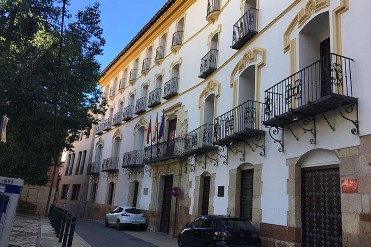
La Plaza del Caño ya existía en el S. XVI, pero fue en la centuria del XIX cuando la tubería que llevaba el agua a la Plaza de España tuvo problemas de filtraciones y se decidió traer a esta. Antaño se llamó Plaza de la Verdulería porque durante mucho tiempo fue utilizada como mercado. Actualmente en ella se ubican importantes edificios históricos y modernos como la Cámara de Comercio, el Iltre. Colegio de Abogados, los Juzgados (en la antigua Casa del Corregidor) y el Pósito de Panaderos.
LORCA
Calle Abad de los Arcos
30800 - LORCA
El Real Colegio de la Purísima Concepción fue levantado en el S. XVIII con ayuda real como centro donde impartir clases de teología. Finalmente ha sido recuperado para albergar el actual Conservatorio de Música Narciso Yepes. En el patio trasero de la calle Cava se rinde homenaje al guitarrista lorquino con una escultura en posición de tocar unas notas en la guitarra española de 10 cuerdas.
LORCA
C/ Corredera (Esquina Glorieta de San Vicente)
30800 - LORCA
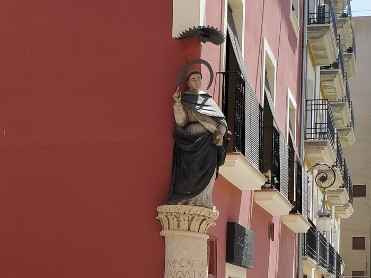
On the corner of the Casa de los Marín Ponce de León is a replica of a Roman milestone from the time of Augustus (8-2 BC), which was used as a pedestal for the sculpture of Saint Vincent placed there in homage to the preaching of the Valencian saint in Lorca in the 15th century. The original (along with others) is in the MUAL. Municipal Archaeological Museum. Above it is the sculpture of San Vicente Ferrer. Tradition has it that he came to Lorca to preach in the 15th century and that he said before he left "not even dust".
LORCA
Plaza del Caño
30800 - LORCA
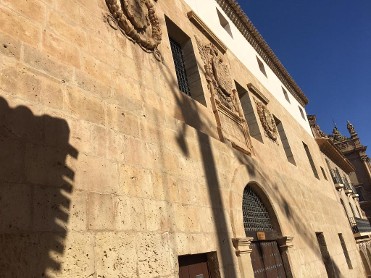
On the corner of the Casa de los Marín Ponce de León is a replica of a Roman milestone from the time of Augustus (8-2 BC), which was used as a pedestal for the sculpture of Saint Vincent placed there in homage to the preaching of the Valencian saint in Lorca in the 15th century. The original (along with others) is in the MUAL. Municipal Archaeological Museum. Above it is the sculpture of San Vicente Ferrer. Tradition has it that he came to Lorca to preach in the 15th century and that he said before he left "not even dust".


