
ALHAMA DE MURCIA
Cerrado temporalmente

C/ Sánchez Vidal, 5
30840 - ALHAMA DE MURCIA
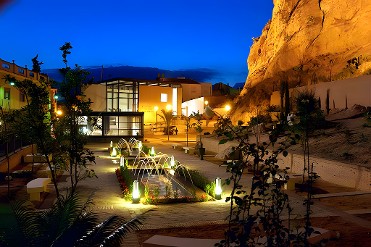
Temporarily closed for renovation work, efficiency improvements and museum digitisation, The Museo Arqueológico de Los Baños is an on-site museum, created to preserve and protect the archaeological remains of the Baths of Alhama de Murcia. Its restoration and development has meant an important contribution to the study of hydrotherapy and its architecture throughout different periods of its history. The thermal complex has restored its original areas through a series of renovation projects and adaptations, creating a modern building, a garden area with water at the forefront and the inside museological preservation of the remains, showing thematic sections about different cultures. Its architecture is an example of conservation of heritage, in the same complex, from Roman rooms, to their reuse in the Islamic and Christian periods, until the construction of the new Hotel Spa in the 19th century. In 1983 its archaeological remains were declared a Historical Artistic Monument of National Character and in May 2008 it was included in the Region of Murcia’s Museum Network. The Museum hosts the Archaeological Collection and Municipal Ethnographic of Alhama.
CARTAGENA

Paseo Alfonso XII, 22
30201 - CARTAGENA
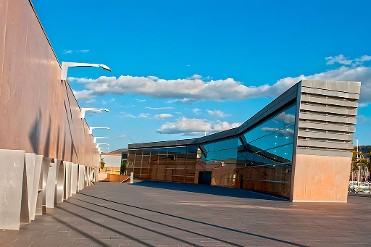
ARQUA Museo Nacional de Arqueología Subacuática is the institution in charge of studying, valuing, investigating, preserving, disseminating and protecting the Spanish underwater cultural heritage. Furthermore, the ARQUA takes charge of the Odyssey’s treasure. The Nuestra Señora de las Mercedes frigate collection, which consists of more than 570,000 gold and silver coins from the late 18th century and the beginning of the 19th century. ‘PHENICIANS, Merchants of the Sea’ - Temporary Exhibition from 19 November 2025 to 17 May 2026 The site, discovered in the 1950s on the coast of San Javier (Murcia), has proven to be of extraordinary importance for studies of Phoenician society. Currently, of the six Phoenician shipwrecks excavated and studied in depth in the Mediterranean, three have been found on the Spanish coast, specifically in the Region of Murcia: two located in the bay of Mazarrón and the third in the municipality of San Javier, to which this exhibition is dedicated. Thanks to the excavation of this wreck, it has been possible to confirm several key aspects, such as the existence of Phoenician trade routes along the regional coastline, the exploitation of the Iberian Peninsula's natural resources, the cultural influence exerted on local communities, and the consolidation of a complex exchange system that connected the entire Mediterranean. The significance of these findings has transcended national borders, placing Bajo de la Campana at the centre of international conferences, symposiums and studies for several decades.
CIEZA
C/ San Sebastián, 17
30530 - CIEZA
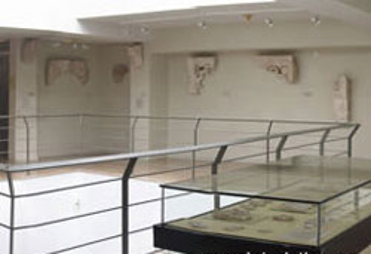
Opened in May 1999, it houses a magnificent sample of the archaeological patrimony of Cieza. It consists of four levels with a splendid sample of the archeological and ethnographic legacy of our territory, wich invites the visitor to explore the history otf the village from Palaeolithic to the early twentieth century. One of the most valuable treasures of this museum is the life-size reproduction of houses 6 and 10 of the arabic town of Siyâsa (located on the so called "Hill of the Castle"). Thes life-size Arabian houses contain arches and proticos from the almohad caliphate and the beginning of the pre-nazarie era, plasterwork and stuccoes that decorate floors and ceilings as well as a central patio that leads to all the rooms of the house. They really transport the visitors to another time.
SAN PEDRO DEL PINATAR
Avda. de Orihuela, s/n
30740 - SAN PEDRO DEL PINATAR
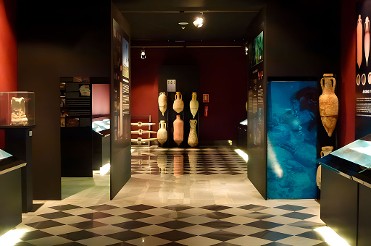
This municipal museum is situated in the historic building known as the Palace of the Baron of Benifayó or Casa de la Rusa. Inside, there are various rooms dedicated to different themes: Archaeology: This section features a display of the municipality’s main archaeological finds, both on land (La Raya) and underwater (Punta de Algas, San Ferreol, La Barra and El Mojón), as well as a selection of fossils and artefacts from prehistoric cultures in the south-east. Alongside these artefacts, there are a series of informative and engaging explanatory panels and models, which provide visitors with key details about the exhibits. Ethnography: This section is dedicated, on the one hand, to the bourgeoisie who settled in San Pedro del Pinatar in the late 19th century, building their summer residences and participating in the social life of the time, and, on the other hand, to the ordinary people who, through their work and effort, managed to build up the municipality and bring it to its current level. Some of the main trades that drove the economy at the time are represented: fishing, agriculture, salt curing and the saltworks. Collection of antique toys: Visitors can view over 300 antique toys, loaned or donated by contributors. The exhibition takes visitors on a journey through the history of toys, from the earliest slingshots, marbles and spinning tops to the first computer video games. Collection of vintage film equipment: Vintage projectors, cameras and equipment typically found in projection rooms. Temporary exhibition gallery: A variety of exhibitions on different themes are held throughout the year (see Facebook).
ÁGUILAS
C/ Conde de Aranda, 5
30880 - ÁGUILAS
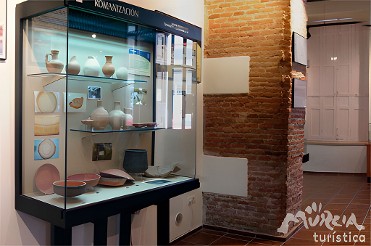
Inside we can review the history of the town, from the Neolithic to the present day. it emphasizes the collection of Roman archaeology.
CARTAGENA
Pza. del Ayuntamiento, 9
30202 - CARTAGENA
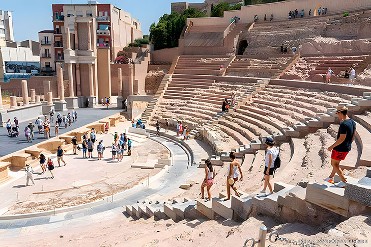
The Museum respond to the need for a museum space in which to bring together all the pieces found during the successive excavations of the Roman Theater. The Museum, designed by architect Rafael Moneo, incorporates the Riquelme Palace and the Church of Santa María la Vieja in the complex, making the Theater the last and most notable piece presented in the Museum. Through these exhibition spaces, visitors will be guided from the lower parts of the city to the interior of the Roman theater. Enjoy the Virtual Tour. Click here
CEHEGÍN
Plaza del Castillo, s/n
30430 - CEHEGÍN
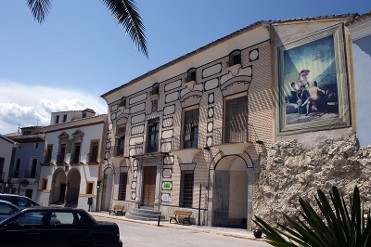
It currently provides 12 exhibition rooms, as well as a library and an information room. The museum consists of three buildings, two of which are historic ones. One is the old Town Hall, the Palacio de los Fajardo, inaugurated in 1676 and whose main façade and outbuildings were built in 1745 on the annexes of the 12th century castle. The other building is located in Calle Mayor and corresponds to a smaller noble house from the 18th century. Between them, the three buildings have a total floor area of more than 2,800 square metres.
CARTAGENA
C/ Ramón y Cajal, 45
30205 - CARTAGENA
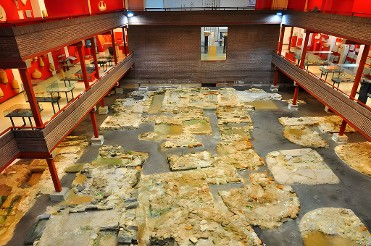
The museum houses one of the most complete archaeological exhibits in the region. The site was built in 1982 around a late-Roman necropolis, which is probably the structure that gives more character to the museum. The route of the permanent exhibition starts in Prehistory and passing through the Iberian Culture finds in the period of Romanization the bulk of the exhibition where the collection of funeral epigraphy, one of the best in Spain, deserves a special mention. Equally important are the Roman mining sections, with a varied typology of products, tools, and utensils of that period , or that of ceramic productions, mainly crockery , which testify to the intense commercial traffic that the port maintained from the second century B. C. onwards Enjoy a Virtual Visit to the Municipal Archaeological Museum of Cartagena. Click here
CARAVACA DE LA CRUZ
Cuesta del Castillo, s/n. Iglesia de la Soledad
30400 - CARAVACA DE LA CRUZ
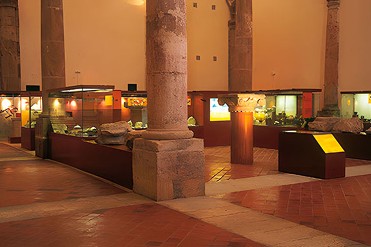
The church was built in the location of the primitive church of El Salvador. It was built in the second third of the 17th century under the name of La Soledad, thanks to the patronage of Mr Pedro Muñoz Otálora, the senior lieutenant of the town. The church was designed and built by the master Juan Garzón Soriano, with the intervention of the local carpenter Sebastian de la Iglesia. Since the late 17th century, it became part of the primogeniture of the Muñoz family. During the 18th and 19th century it went to the Counts of Clavijo and Marquises of El Salar due to marriage covenants and inheritance divisions. The Archaeological Museum is a first-rate equipment located in the historic city centre. It collects pieces of great value, as a result of the many findings in the excavations at several archaeological sites, especially those carried out in the Iberian-Roman complex of La Encarnación. In this museum we can find pottery, weapons, coins, architectural elements, etc. Telephones: Bookings: 968 705 620 Museum: 968 700 512
CARTAGENA
C/ Adarve
CARTAGENA
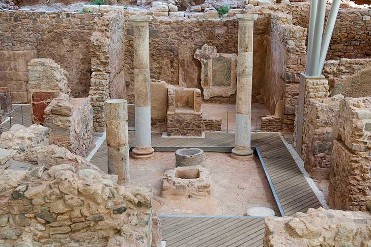
The Roman Forum Museum stands as the entrance to one of the largest urban archaeological parks in Spain. Throughout its various halls, where a careful selection of pieces is exhibited, you will be able to learn about the long history of Cerro del Molinete from today back to the old Carthago Nova. The visit concludes with a tour of important remains of the glorious Roman era that invite you to stroll through them: the Curia or local senate with its richly decorated marble pavement; the Colonial Forum, the city’s neuralgic centre, the distribution of which symbolised at various levels the hierarchy between the divine and the human; the Sanctuary of Isis where the mystery cults of the Egyptian gods were celebrated; the old roads with cart tracks; the port’s thermal baths and in particular its magnificent entrance portico with its original flooring; and to finish the Atrium Building, with its high walls and pictorial decorations that transport you to the great banquets of the Roman Empire.
CARTAGENA
Paseo de Alfonso XII, frente Dársena Botes. Antiguo CIM
30205 - CARTAGENA
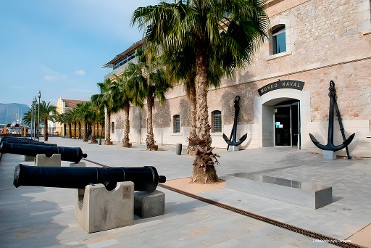
The Naval Museum of Cartagena is located on the ground floor of the building built in the 18th century as the Prisoners and Slaves Barracks, which became the Marine Instruction Barracks after the Civil War. In 2005, thanks to the signing of an agreement between the Ministry of Defense and the Autonomous Community, it was remodeled to host one of the campus of the Polytechnic University of Cartagena, reserving part of its space for the Naval Museum. In 2013, the museum was expanded with the inauguration of the Isaac Peral Hall in the former Workshop of Calderería del Arsenal. After the rehabilitation of the ship, the Peral Submarine moved from the seafront to undertake its restoration and its adequate exposure to the public, becoming the main piece of the museum. In the same space, the Legacy of Isaac Peral is displayed, which contextualizes the important contribution of the Cartagena sailor to scientific and military history. The collection offers a tour of the history of the Navy in the city of Cartagena and is divided into the following thematic areas: - Naval building - Navigation - Naval artillery and portable weapons - Naval Health - Flags and uniforms - Naval painting - Marine infantry - Diving - Underwater weapons - Isaac Peral Room Enjoy the Virtual Visit to the Naval Museum of Cartagena. Click here
JUMILLA
Pza. de Arriba, s/n. Antiguo Palacio del Concejo.
30520 - JUMILLA
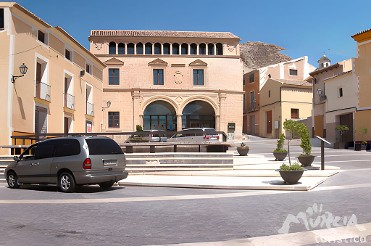
El museo arqueológico está albergado en el Palacio del Concejo, realizado a mediados del siglo XVI, único ejemplo de arquitectura civil dentro del Renacimiento en la Región de Murcia. Tiene tres cuerpos horizontales separados por cornisas. El primero tiene dos amplios arcos que descansan sobre tres gruesas columnas de orden toscano, que daban cobijo a la antigua lonja. El segundo cuerpo, consta de tres ventanas con frontispicios sobre ellas, y el tercero, el más llamativo, es una arcada de columnas salomónicas entrelazadas. Tras la remodelación en 1997, fue inaugurado como Museo. La colección arqueológica cuenta con utensilios encontrados en los ricos yacimientos de la comarca. Además de arte Paleolítico, Neolítico y del Bronce, alberga la colección procedente del poblado de Coimbra y del Barranco Ancho, donde aparecieron 150 sepulturas íberas. Entre cerámica, tabas dadas para el juego, enseres domésticos, lanza y espadas, destaca el Cipo funerario de los Jinetes, de forma cúbica, en el que se relata la vida del personaje en cuatro relieves bien conservados. De época romana, podemos ver un mosaico ramano de la Villa de los Cipreses. Una colección de vajillas de la cerámica típica romana, conocida como terra sigilita, terracotas de dioses domésticos y lucernas, algunas con motivos cristianos, completan la exposición de este periodo. De la época islámica se conservan cerámicas estampilladas (S.XIII) y con decoración al manganeso (S.XII). Las lozas cristianas cierran este recorrido histórico, destacándose las lujosas de reflejos metálicos (S.XV).
MURCIA
Av. Alfonso X "el Sabio", 7
30008 - MURCIA
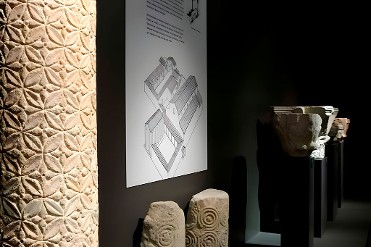
The Archaeological Museum is located in the House of Culture. At the beginning it was built as Provincial Palace of Archives, Libraries and Museums, thanks to the architects Luis Moya and José Luis León. It opened its doors in 1956. It is the best museum to know the most characteristic of regional archeology. TIME: XX Century STYLE: Historicist
ÁGUILAS
C/ Canalejas (esquina Quintana)
30880 - ÁGUILAS
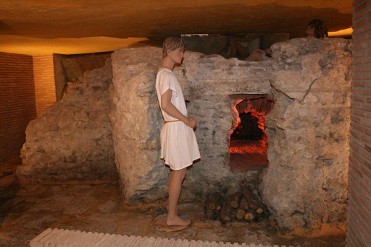
In the ground floor of the building located in C/ Rey Carlos III there are remains in situ of Roman baths dating back to the 1st century AD, specifically part of a caldarium (hot baths room).
LORCA
Plaza de Don Juan Moreno, s/n.
30800 - LORCA
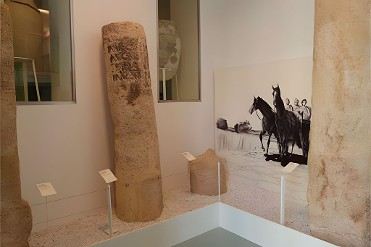
The visitor will find a completely renovated museum from the development of a new musealization, with which it has tried to enhance unity and clarity in the expository discourse, from the thread generated by the traces left by our ancestors in this territory for 30,000 years. There are different spaces where the selected pieces are shown having seismoresistant criteria that guarantee their safety and that of the visitors.
CARTAGENA
Centro Cultural Ramón Alonso Luzzy. C/ Jacinto Benavente, 7
30203 - CARTAGENA
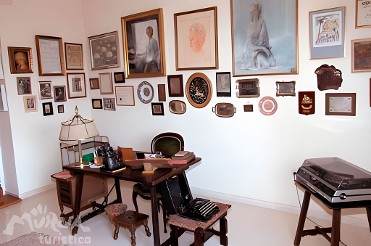
The museum, which is currently located in the Ramón Alonso Luzzy Cultural Centre, faithfully reproduces the furniture and decorative objects from the living room - hall and office of the last home in Madrid of the writer Carmen Conde and her husband Antonio Oliver. All the objects were donated by the writer herself in 1995 to the City Council of Cartagena. The collection has nearly 600 objects related to art and ethnography. Enjoy the Virtual Tour. Click here
SAN JAVIER
Ctra. a Cartagena, s/n
30730 - SAN JAVIER
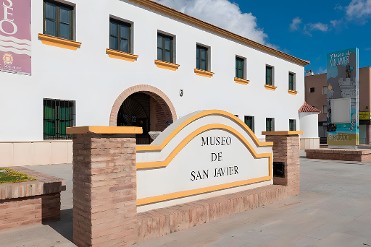
VER VIDEO (Realidad Virtual) Antigua Casa Cuartel de la Guardia Civil. Edificio aislado de mediados del siglo XX que, respondiendo a un antiguo modelo arquitectónico nacional, ha conservado su edificación principal en forma de L, las garitas y el patio central que se erige como uno de los elementos más atractivos del edificio. Sus orígenes como museo se remontan al año 1996. Cuenta con una importante sala etnológica que, a través de sus secciones dedicadas a la tierra (agricultura), el mar (pesca) y el aire (Academia General del Aire), ilustra la historia del municipio entre mediados del siglo XIX y mediados del siglo XX; la sala del Belén de España, homenaje al belén más grande de Europa al aire libre que desde el año 1969 se instala cada Navidad en la Plaza de España de Javier; y una importante sala de exposiciones temporales.
PORTMAN (LA UNIÓN)
C/ Caridad, s/n
30364 - PORTMAN (LA UNIÓN)
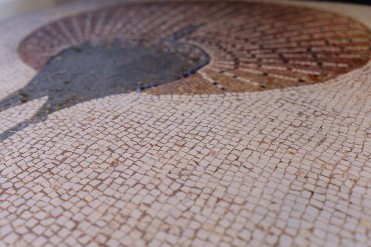
The Mining and Archaeological Research Centre is situated in the Ancient Charity Hospital and houses the roman remains that were found in the Sierra Minera. One of the most representative pieces is the polychrome mosaic made of "opus tesellatum", found in the roman villa of the I-III century AC, named Villa del Paturro (Portán).
MULA
C/ Doña Elvira, 4
30170 - MULA
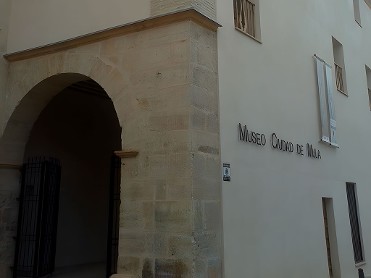
How much do you know about Mula? If it is not enough, the City of Mula Museum will teach you all you need to know about Mula culture, art and customs. One of its permanet exhibitions is " El Legado de Mula en la Historia". In it , the visitor takes a tour around from prehistory to the recent history of the city. The pieces that can be seen just come from archaeological sites in Mula, whose collections were in The Archaeological Museum of Murcia .
MULA
C/ Marqués, 1
30170 - MULA
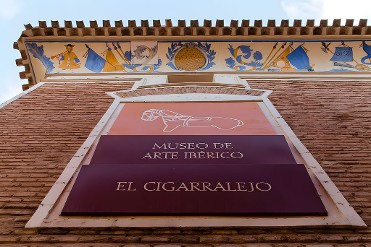
This museum located on Marqués street is an essential stop-off point of the historic quarter of Mula. The Cigarralejo Museum of Iberian Art is established in the former palace of the Marquis of Menahermosa. It is a typical example of Murcian Baroque built in the 18th century. The facade has a cornise decorated with military paintings which represent the Marquis´profession. The interior of the building hosts ten halls which contain the most important art collection of Spain composed by more than 80 funerary offerings, pottery pieces, stone sculptures or weapons. Museo Monográfico El Cigarralejo Brochure (2 Mb)


