
Holiday accommodation
Murcia
Piso compartido de 5 habitaciones muy luminoso, amplio y tranquilo, al principio del barrio de La Flota, y a 8-10 minutos del centro de Murcia. Parada de tranvía justo enfrente, rodeado de zonas verdes, polideportivo con piscina climatizada a 3 min. andando, cafeterías, panaderías y tiendas de barrio en los alrededores, supermercados a 5-7 min. Disponibilidad de alquiler por habitaciones.
Active tourism
Blanca
MurciAventuraS es la empresa líder de la zona en el sector del turismo activo. Son más de 20 años lo que avala nuestra profesionalidad. Nuestro personal altamente cualificado trabaja día tras día en lograr las mejores experiencias para nuestros clientes. Ofrecemos una gran variedad de actividades para todas las edades, grupos de amigos, familiares, escolares, en pareja…siempre pensando en la seguridad y el bienestar del cliente y como no, respetando el entorno natural al máximo. Nuestras instalaciones y materiales en constante renovación aseguran que tu actividad sea 100% perfecta. Si buscas una experiencia inolvidable MurciAventuraS es tu aliada. DESCENSO DEL SEGURA EN RAFTING, BANANA O KAYAK 14km de diversión en el Río Segura+ reportaje fotográfico+ picnic. Disfruta de la actividad mas divertida con la familia, en pareja o amigos mientras en uno de los parajes más espectaculares de la Región de Murcia. Edad mínima 6 años. En el precio va incluido: Recorrido de 14km desde Cieza, pasando por Abarán hasta llegar a la localidad de Blanca Traslado, del lugar de quedada al punto de salida, en bus o vehículo de empresa. Cascos, chalecos salvavidas, remos, balsas de rafting. Guías de aguas bravas. Cursillo Express. Almuerzo y bebida. Reportaje fotográfico de todo el recorrido, más de 300 fotos. Vestuarios, Taquillas, duchas y aseos al terminar. Seguros de responsabilidad civil y Accidente. Servicio de cafetería. RUTA EN BUGGY VALLE DE RICOTE Conoce el Valle de Ricote sobre ruedas, conduce tu propio buggy durante una hora y media en una ruta que te sorprenderá, incluye reportaje fotográfico y picnic. Requisitos: Licencia de conducir B. Edad mínima copiloto 5 años. PAINTBALL Goza al máximo de este juego de estrategia y diviértete como nunca en nuestro campo totalmente ecológico en el Valle de Ricote. Incluye todo el material necesario, 100 bolas por persona, tiempo limitado de juego, reportaje fotográfico, duchas, aseos y vestuarios.
Museums
Santiago de La Ribera (San Javier)
SAN JAVIER TYPHLOLOGICAL MUSEUM The Typhlological Aeronautical Museum (MΛT) is a new open-air venue accessible to all and adapted for the visually and hearing impaired, where visitors are provided with information through both sight (the traditional means) and touch. In order to help the visitor’s understanding and enjoyment of the museum, the MΛT uses an easy-to-install QR code system, which provides immediate access to the contents of all exhibits in the museum, thus offering the visitor detailed information of each and every model exhibited throughout the circuit. The relationship of San Javier with aeronautics is both close and old. The first airfield in the municipality dates back to 1920, when the Spanish Navy decided to build its first naval air station in Santiago de la Ribera as the main base of the Spanish Naval Aviation. After the Spanish Civil War, in July 1943, the military academy of the Spanish Air Force (AGA) was created with the purpose of standardising Air Force officers’ training and it was located at the military facilities of the municipality of San Javier. The uninterrupted operation of air activities during over a century and its prestige as a flight training school have turned this military air base in San Javier into a worldwide reference. The pieces currently comprising the MAT include a three-dimensional photocall, models of the most characteristic planes throughout the history of the air base, and benches designed to capture the essence of each aircraft by reproducing their distinctive color and aeronautical insignia. 1. Dornier J"WAl" 2. Beechcraft T-34 "Mentor" 3. North American T-6 "Texan" 4. Hispano Ha-200 "Saeta" 5. CASA C-101 "Mirlo" 6. Flight helmet from the Patrulla Águila (Eagle Patrol). 7. Aircraft T-12 Casa-212 "Aviocar" 1974-2003 Navigation School. 8. Aircraft ENAER T-35 C "Pillan" 1996-2015 Elementary Flight Trainer. 9. Aircraft E-.3-B Bucker 1945-1976 Elementary Flight Trainer 10. Aircraft Beechcraft F-33 "Bonanza" 1974-1994 Navigation Flight Trainer 11. Autogiro C-4 1922-1923 Experimental Autogiro built by Juan de la Cierva 12. Aircraft Casa C-352-L Junkers 52 1947-1973 Navigation School. 13. Aircraft Polikarpov I-16 "Mosca" or "Rata" High-Speed Flight School 14. Aircraft Pilatus PC-21 Elementary and Basic Flight Trainer".
Museums
Ceutí
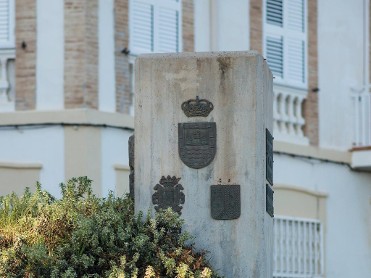
Obras situadas en edificios públicos: Ayuntamiento de Ceutí: - Desnudos en bronce (José Planes) - El violinista (Paco Barón) Centro Cultural: - Vuelo rasante (Paco Barón) Biblioteca: - El ciprés de Silos (Paco Barón) Obras situadas en espacios abiertos de reciente ubicación: - Torso (Eduardo Lastre) - Michelina (Fernando Bellver) - El Caballo de Troya (Pepe Yagües) Obras situadas en la zona de Los Torraos: - Murales costumbristas (Marisa Peagudo) - Monolito de entrada a Los Torraos (Diego Mirete) Otros autores con obra en el Polígono Industrial de Los Torraos: - José Noja y José Luis Sánchez Obra situada en la salida a la autovía de Murcia-Madrid: - Zepti, espacio de luna (Antonio Martínez Torres)
Museums
Portman (La Unión)
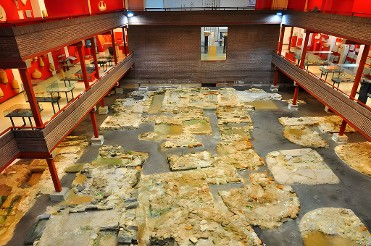
The Mining and Archaeological Research Centre is situated in the Ancient Charity Hospital and houses the roman remains that were found in the Sierra Minera. One of the most representative pieces is the polychrome mosaic made of "opus tesellatum", found in the roman villa of the I-III century AC, named Villa del Paturro (Portán).
Museums
Cehegín
It currently provides 12 exhibition rooms, as well as a library and an information room. The museum consists of three buildings, two of which are historic ones. One is the old Town Hall, the Palacio de los Fajardo, inaugurated in 1676 and whose main façade and outbuildings were built in 1745 on the annexes of the 12th century castle. The other building is located in Calle Mayor and corresponds to a smaller noble house from the 18th century. Between them, the three buildings have a total floor area of more than 2,800 square metres.
Museums
Lorca
The visitor will find a completely renovated museum from the development of a new musealization, with which it has tried to enhance unity and clarity in the expository discourse, from the thread generated by the traces left by our ancestors in this territory for 30,000 years. There are different spaces where the selected pieces are shown having seismoresistant criteria that guarantee their safety and that of the visitors.
Museums
Jumilla
El museo arqueológico está albergado en el Palacio del Concejo, realizado a mediados del siglo XVI, único ejemplo de arquitectura civil dentro del Renacimiento en la Región de Murcia. Tiene tres cuerpos horizontales separados por cornisas. El primero tiene dos amplios arcos que descansan sobre tres gruesas columnas de orden toscano, que daban cobijo a la antigua lonja. El segundo cuerpo, consta de tres ventanas con frontispicios sobre ellas, y el tercero, el más llamativo, es una arcada de columnas salomónicas entrelazadas. Tras la remodelación en 1997, fue inaugurado como Museo. La colección arqueológica cuenta con utensilios encontrados en los ricos yacimientos de la comarca. Además de arte Paleolítico, Neolítico y del Bronce, alberga la colección procedente del poblado de Coimbra y del Barranco Ancho, donde aparecieron 150 sepulturas íberas. Entre cerámica, tabas dadas para el juego, enseres domésticos, lanza y espadas, destaca el Cipo funerario de los Jinetes, de forma cúbica, en el que se relata la vida del personaje en cuatro relieves bien conservados. De época romana, podemos ver un mosaico ramano de la Villa de los Cipreses. Una colección de vajillas de la cerámica típica romana, conocida como terra sigilita, terracotas de dioses domésticos y lucernas, algunas con motivos cristianos, completan la exposición de este periodo. De la época islámica se conservan cerámicas estampilladas (S.XIII) y con decoración al manganeso (S.XII). Las lozas cristianas cierran este recorrido histórico, destacándose las lujosas de reflejos metálicos (S.XV).
Museums
Caravaca de La Cruz
The church was built in the location of the primitive church of El Salvador. It was built in the second third of the 17th century under the name of La Soledad, thanks to the patronage of Mr Pedro Muñoz Otálora, the senior lieutenant of the town. The church was designed and built by the master Juan Garzón Soriano, with the intervention of the local carpenter Sebastian de la Iglesia. Since the late 17th century, it became part of the primogeniture of the Muñoz family. During the 18th and 19th century it went to the Counts of Clavijo and Marquises of El Salar due to marriage covenants and inheritance divisions. The Archaeological Museum is a first-rate equipment located in the historic city centre. It collects pieces of great value, as a result of the many findings in the excavations at several archaeological sites, especially those carried out in the Iberian-Roman complex of La Encarnación. In this museum we can find pottery, weapons, coins, architectural elements, etc. Telephones: Bookings: 968 705 620 Museum: 968 700 512
Museums
Lorca
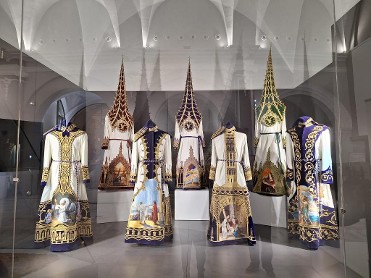
The tradition of Lorca embroidery, candidate for UNESCO's Intangible Cultural Heritage, is the main protagonist, along with the image of the Stma. Virgen de los Dolores, from this museum. Therefore, you will have the privilege of admiring the process of creating these works of art, some of them declared B.I.C. (Well of cultural interest), in the embroidery workshop on the second floor. The Blue Museum of Holy Week welcomes in a historic building, the old Charity Hospital of San Juan de Dios, a broad and representative sample of the best of the heritage of the Brotherhood of Labradores (Paso Azul). As well as a tour of the history of this brotherhood in Holy Week Lorca (declared a festival of International Tourist Interest). Recently restored and inaugurated, this museum has three completely accessible floors dedicated to offer a vision of this brotherhood through its embroideries, the workshop, stunning audiovisuals and images of the history of Paso Azul. From Monday to Friday, you can visit the embroidery workshop.
Museums
Caravaca de La Cruz
ADVANCE RESERVATION The monographic museum dedicated to the sculptor José Carrilero’s work is located in the square that carries his name. It takes up the rears and vaults from a former palatial home built in the second quarter of the 17th century by Don Luis de Gadea Sahajosa, councilor of Caravaca The building: During the 18th and 19th centuries, the property belonged to a branch of the family Muñoz de Otálora and their heirs the Marquises of San Mamés de Arás, until it was acquired by other individuals. During some time in the 20th century, the building was leased as a Civil Guard Barracks House. The exposition: The museum takes up an area of about 650 square meters and it is home to 90 works in total, including sculptures, paintings and medals. It consists of four exhibition halls, a multipurpose room and other service facilities. In the first, second and third floor a representative sample of the painter’s work is exhibited. The exhibition highlights several sketches and figurative designs which later on became sculptural works. The basement of the building, where the old vaulted wine cellars were situated, is almost entirely dedicated to the sculptural work of Carrilero. It contains 49 different sized bronze works and 14 sculptured and engraved medals. Interesting feminine portrayals, academic torsos and unique relieves stand out in the building. The square and the façade of the museum exhibit an extraordinary group of sculptures of natural size, consisting of three instrumentalists, including the statue of a flutist, a cellist and a trumpeter. It’s a characteristic theme among the authors’ repertoire. More information
Museums
Mula
How much do you know about Mula? If it is not enough, the City of Mula Museum will teach you all you need to know about Mula culture, art and customs. One of its permanet exhibitions is " El Legado de Mula en la Historia". In it , the visitor takes a tour around from prehistory to the recent history of the city. The pieces that can be seen just come from archaeological sites in Mula, whose collections were in The Archaeological Museum of Murcia .
Museums
Mula
Casa Pintada Foundation is a cultural project emerged and consolidated through Cristóbal Gabarrón Foundation and Mula Town Hall. It is placed in a XVIII century stately and emblasoned home known by its wonderful sgraffito as Casa Pintada. It shows Cristóbal Gabarrón´s career and, at the same time, it is a showcase of Murcian creativity. This has made possible the return to Mula of one of the most internationally recognised artist whose purpose is to establish himself like a bastion in the Region culture and, at the same time, to be a reference of all the cultures coexisting in the Region.
Museums
Archena
Es un edificio de diseño modernista, construido en el emblemático paraje natural de la ribera del río Segura, desde donde se puede disfrutar de las increíbles vistas de "Cabecico del Tío Pío", lugar de importantes restos arqueológicos, y del magnífico entorno natural que le rodea. El Museo de Archena se presenta como un espacio dinámico, distribuido en cuatro salas, en el que se exponen multitud de restos arqueológicos y documentación de gran contenido histórico, que narra el pasado de este municipio y de su Villa Termal .
Museums
Mula
This museum located on Marqués street is an essential stop-off point of the historic quarter of Mula. The Cigarralejo Museum of Iberian Art is established in the former palace of the Marquis of Menahermosa. It is a typical example of Murcian Baroque built in the 18th century. The facade has a cornise decorated with military paintings which represent the Marquis´profession. The interior of the building hosts ten halls which contain the most important art collection of Spain composed by more than 80 funerary offerings, pottery pieces, stone sculptures or weapons. Museo Monográfico El Cigarralejo Brochure (2 Mb)
Museums
Ojós
El Museo de Belenes del Mundo de Ojós (MBM) se inauguró el 23 de diciembre de 2013 y se localiza en una antigua casa señorial conocida como Casa de la Inquisición, cuya construcción se remonta al siglo XVIII y su escudo nobiliario representa a la familia Marín y Melgarejo, regidores de la población durante los siglos XVII y XVIII. Los fondos del MBM están constituidos por la colección de belenes de titularidad municipal y mayoritariamente por la colección de belenes del Museo de Bellas Artes de Murcia (MUBAM), de titularidad de la Comunidad Autónoma de la Región de Murcia, adquirida en el año 1992 y cuyo origen era una colección privada. La mayor parte de la colección está fechada en torno a los años 1970-1990 (aunque se exponen algunas piezas de finales del siglo XIX o principios del XX), muchas de ellas de gran calidad y de autores reconocidos a nivel internacional desaparecidos hoy día. Desde junio de 2015, la “Colección Museográfica de Belenes del Mundo de Ojós. Colección MUBAM”, de titularidad municipal, está integrada en el Sistema de Museos de la Región de Murcia e inscrita en el Registro de Museos y Colecciones Museográficas de dicha región. En la actualidad se exponen unos 260 conjuntos, aunque el total de la colección comprende más de 805 (cuyo número va creciendo constantemente gracias a las donaciones), que permiten crear una exposición dinámica para apreciar la gran diversidad de esta manifestación cultural en todo el mundo y que convierte a la localidad de Ojós en un destacable punto de referencia sobre la gran riqueza de fenómeno del belenismo a nivel internacional, íntimamente ligado con la historia y el desarrollo de las diferentes culturas. Del mismo modo, esta muestra se convierte en una manera amena y didáctica de conocer la diversidad, riqueza cultural y tradiciones de los diferentes países a través de las vestimentas, oficios, fisonomías, flora, fauna, materiales, etc., que reflejan las más de 2.700 figuras expuestas.